Home › Reptilia › Testudinidae › Desert Tortoise (Gopherus agassizii)
SPECIES PROFILE
Desert Tortoise (Gopherus agassizii)
Gopherus
IUCN STATUS
Threatened

CONSERVATION STATUS
Threatened
CLASS
Reptilia
GEOGRAPHICAL RANGE
Mojave Desert of California, Nevada, Utah, and Arizona; closely related Sonoran Desert Tortoise in Arizona and Mexico
DIET
Herbivore
HABITAT
Mojave and Sonoran Desert scrub; sandy or gravelly soils for burrow construction; rocky desert washes for foraging
🔬 Classification
PHYLUM
Chordata
CLASS
Reptilia
ORDER
Testudines
FAMILY
Testudinidae
GENUS
Gopherus
📋 Description
SIZE
23–36 cm carapace; 4–7 kg; can live over 80 years
COLORATION
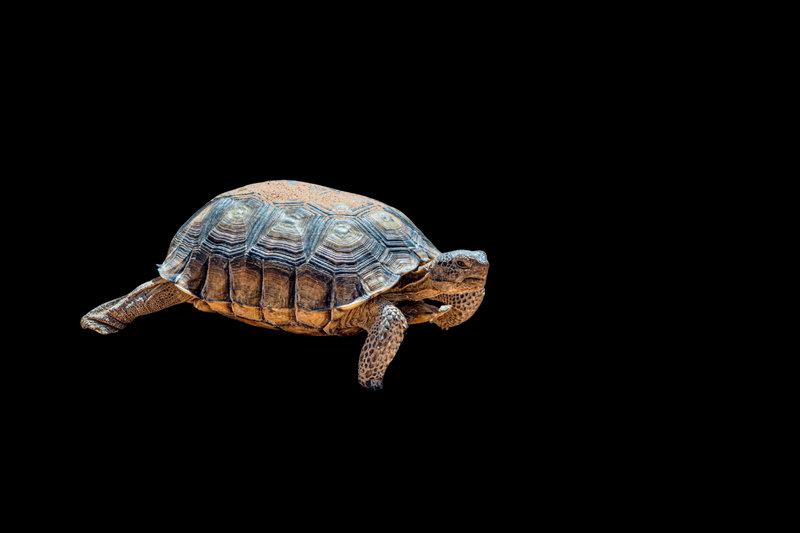
High-domed olive to dark brown carapace; thick elephantine front legs for digging; prominent gular projection under the chin in males
ADAPTATIONS
Can store up to 40% of its body weight in water in its bladder; spends 95% of its life in burrows to avoid extreme temperatures
🌿 Ecology
HABITAT
Mojave and Sonoran Desert scrub; sandy or gravelly soils for burrow construction; rocky desert washes for foraging
DIET
Herbivore
GEOGRAPHIC RANGE
Mojave Desert of California, Nevada, Utah, and Arizona; closely related Sonoran Desert Tortoise in Arizona and Mexico
REPRODUCTION
Males combat by attempting to flip rivals; 1–14 eggs buried in sandy soil in summer; hatchlings extremely vulnerable to predation
DIET DETAILS
Annual wildflowers, grasses, cacti, and other desert plants; obtains most of its water from food plants after rain
⚠️ Threats & Conservation
PRIMARY THREATS
Raven predation of hatchlings; respiratory disease; off-road vehicle mortality; illegal collection; habitat loss
💡 Interesting Facts
1
The Desert Tortoise can survive years of drought by metabolising stored water from its bladder — Indigenous peoples could carry live tortoises as a water source on long desert crossings.
2
A tortoise's shell is composed of over 60 bones including the spine and ribcage which have fused and expanded; the shell cannot be removed without killing the animal.
🔭 Sighting Guide
📍 BEST PLACES TO SIGHT
Joshua Tree National Park near Twentynine Palms, CA, has Desert Tortoises visible along sandy wash trails in spring
Mojave National Preserve near Baker, CA, has one of the densest Desert Tortoise populations in the Mojave
Red Cliffs National Conservation Area near St. George, UT, has Desert Tortoises at the northern edge of their range
🗓️ BEST TIME TO SIGHT
Spring and autumn. Active after spring rains in April and May; look along desert washes in the Mojave and Sonoran Deserts.
🎯 SIGHTING TIPS
April and May after winter rains and again in September; best in the morning along sandy desert washes in Joshua Tree National Park and Mojave Preserve.