Home › Mammalia › Ursidae › Grizzly Bear (Ursus arctos horribilis)
SPECIES PROFILE
Grizzly Bear (Ursus arctos horribilis)
Ursus
IUCN STATUS
Threatened

CONSERVATION STATUS
Threatened
CLASS
Mammalia
GEOGRAPHICAL RANGE
Formerly across much of North America; now primarily in Alaska, Yukon, BC, and the Greater Yellowstone and Northern Continental Divide ecosystems
DIET
Omnivore
HABITAT
Diverse habitats from coastal rainforest to alpine meadow; requires large wilderness areas with minimal human disturbance
🔬 Classification
PHYLUM
Chordata
CLASS
Mammalia
ORDER
Carnivora
FAMILY
Ursidae
GENUS
Ursus
📋 Description
SIZE
Males 180–360 kg; females 130–200 kg; shoulder hump distinctive
COLORATION
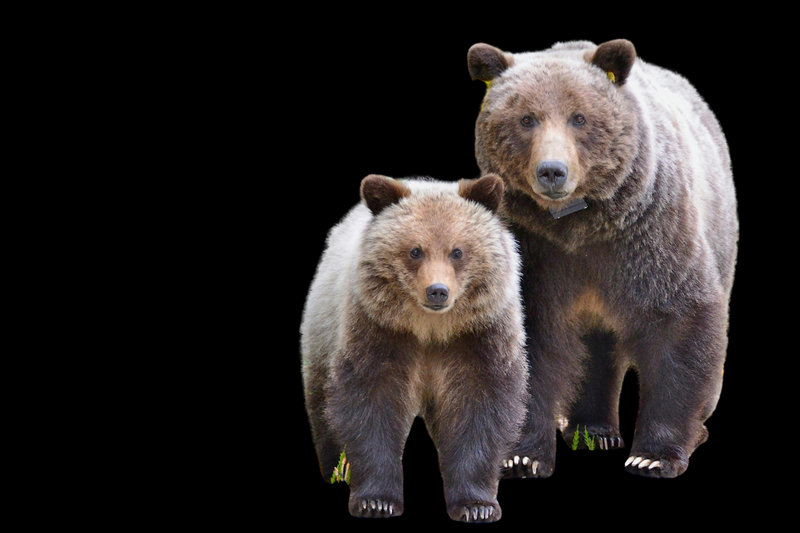
Brown to blond or silver-tipped coat (the silver tips give the "grizzled" appearance); prominent shoulder hump of muscle; dished facial profile
ADAPTATIONS
Massive shoulder hump of pure muscle for digging; long curved front claws up to 10 cm; excellent sense of smell detecting food from 30 km
🌿 Ecology
HABITAT
Diverse habitats from coastal rainforest to alpine meadow; requires large wilderness areas with minimal human disturbance
DIET
Omnivore
GEOGRAPHIC RANGE
Formerly across much of North America; now primarily in Alaska, Yukon, BC, and the Greater Yellowstone and Northern Continental Divide ecosystems
REPRODUCTION
Females give birth to 1–4 cubs in the den in January; cubs emerge in spring and stay with mother for 2–3 years
DIET DETAILS
Highly varied: whitebark pine nuts, berries, roots, ground squirrels, elk calves, carrion, and salmon where available
⚠️ Threats & Conservation
PRIMARY THREATS
Conflict with livestock and humans; habitat fragmentation; reduced whitebark pine from blister rust and beetle kill; prey depletion
💡 Interesting Facts
1
Grizzly Bears can smell food from up to 30 km away — their sense of smell is roughly 7 times more powerful than a bloodhound's.
2
A Grizzly Bear can gain over 180 kg of fat during autumn hyperphagia (intensive feeding) to survive a winter den without eating, drinking, urinating, or defecating.
🔭 Sighting Guide
📍 BEST PLACES TO SIGHT
Lamar Valley in Yellowstone National Park, WY, is one of the best places in the world to see wild Grizzly Bears from the road
Many Glacier area of Glacier National Park, MT, has Grizzly Bears in alpine meadows and berry fields
Hayden Valley in Yellowstone National Park, WY, has Grizzly Bears foraging in open meadows near the Yellowstone River
🗓️ BEST TIME TO SIGHT
Spring to autumn. Lamar Valley in Yellowstone offers reliable sightings at dawn and dusk; coastal bears fish for salmon in Alaska in August.
🎯 SIGHTING TIPS
May to October in Yellowstone's Lamar Valley and Hayden Valley for roadside sightings; Glacier National Park for backcountry encounters.