Home › Reptilia › Testudinidae › Leopard Tortoise (Stigmochelys pardalis)
SPECIES PROFILE
Leopard Tortoise (Stigmochelys pardalis)
Stigmochelys
IUCN STATUS
Least Concern

CONSERVATION STATUS
Least Concern
CLASS
Reptilia
GEOGRAPHICAL RANGE
East and Southern Africa
DIET
Herbivorous
HABITAT
Savannas, grasslands, scrublands
🔬 Classification
PHYLUM
Chordata
CLASS
Reptilia
ORDER
Testudines
FAMILY
Testudinidae
GENUS
Stigmochelys
📋 Description
SIZE
40-70 cm (shell), 15-54 kg
COLORATION
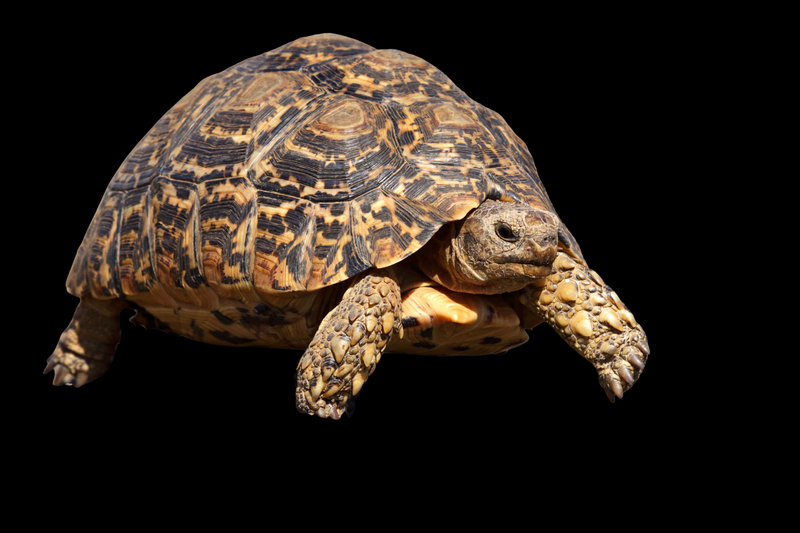
Yellow with black spots; domed shell
ADAPTATIONS
Thick shell for protection; grazes widely
🌿 Ecology
HABITAT
Savannas, grasslands, scrublands
DIET
Herbivorous
GEOGRAPHIC RANGE
East and Southern Africa
REPRODUCTION
5-30 eggs; incubation 150-400 days
DIET DETAILS
Grasses, succulents, fruits
⚠️ Threats & Conservation
PRIMARY THREATS
Pet trade, habitat loss
💡 Interesting Facts
1
Mobile Homes: Leopard tortoises carry their spotted shells as lifelong shelters, retreating inside at the slightest threat, a design so effective they rarely need to flee. Their patterns fade with age, reflecting decades of sun and wear.
2
Drought Defiers: They store water in their bodies and eat succulents to survive arid months, allowing them to roam far from water sources where others falter. This endurance has kept them thriving across Africa's dry plains for millennia.
🔭 Sighting Guide
📍 BEST PLACES TO SIGHT
Serengeti National Park, Tanzania
Kruger National Park, South Africa
Etosha National Park, Namibia
🗓️ BEST TIME TO SIGHT
Look in grassy areas near roads at midday for tortoises foraging or basking.
🎯 SIGHTING TIPS
June-October: Dry season makes tortoises more active in open savannas.