Home › Mammalia › Ursidae › American Black Bear (Ursus americanus)
SPECIES PROFILE
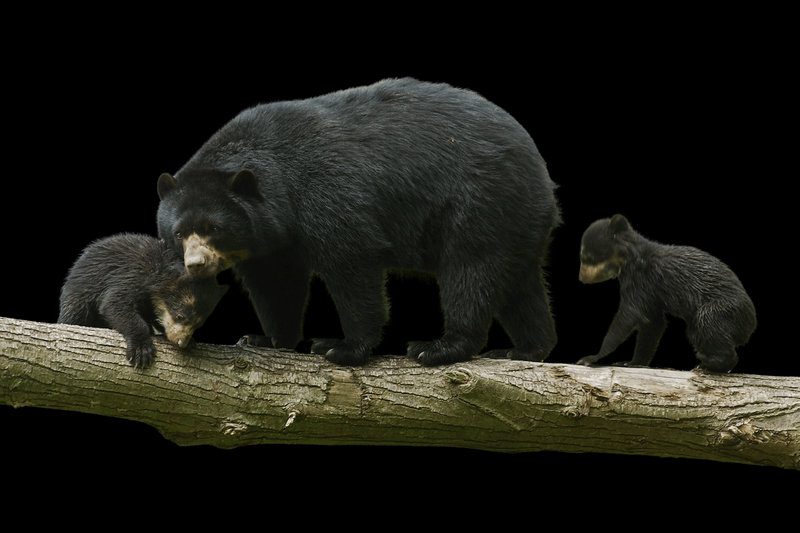
American Black Bear (Ursus americanus)
Ursus
IUCN STATUS
Least Concern


CONSERVATION STATUS
Least Concern
CLASS
Mammalia
GEOGRAPHICAL RANGE
Widespread in forested North America; populations in 40 US states; strongholds in the Appalachians, Pacific Northwest, Rockies, and Southeast
DIET
Omnivore
HABITAT
Highly adaptable; uses forests, mountains, swamps, and suburban edges; requires mast crops (acorns, berries) for autumn hyperphagia
🔬 Classification
PHYLUM
Chordata
CLASS
Mammalia
ORDER
Carnivora
FAMILY
Ursidae
GENUS
Ursus
📋 Description
SIZE
Males 60–300 kg; females 40–80 kg; body length 1.2–1.9 m
COLORATION
Most often black in the East; brown, cinnamon, or blond in the West; some have a white chest patch; pointed muzzle; no shoulder hump
ADAPTATIONS
Dexterous paws for opening containers and climbing trees; excellent memory for food locations; semi-plantigrade walk
🌿 Ecology
HABITAT
Highly adaptable; uses forests, mountains, swamps, and suburban edges; requires mast crops (acorns, berries) for autumn hyperphagia
DIET
Omnivore
GEOGRAPHIC RANGE
Widespread in forested North America; populations in 40 US states; strongholds in the Appalachians, Pacific Northwest, Rockies, and Southeast
REPRODUCTION
Females den November to March; 2–3 cubs born in January; cubs nurse through winter and emerge in spring; mother defends cubs aggressively
DIET DETAILS
Berries, acorns, beechnuts, insects, honey, fish, deer fawns, and carrion; garbage and human food in developed areas
⚠️ Threats & Conservation
PRIMARY THREATS
Habituation to human food leading to conflict and euthanasia; vehicle collisions; hunting where allowed; habitat fragmentation
💡 Interesting Facts
1
The Great Smoky Mountains National Park has the highest density of Black Bears in the eastern US with roughly 1,500 bears — about 2 per square mile.
2
Black Bears have an excellent memory for food locations and can recall where a fruiting tree, berry patch, or garbage can was located years later.
🔭 Sighting Guide
📍 BEST PLACES TO SIGHT
Cades Cove in Great Smoky Mountains National Park, TN, has American Black Bears in open meadows visible from the road
Shenandoah National Park near Luray, VA, has Black Bears along Skyline Drive especially in berry season
Asheville area of the Blue Ridge Parkway, NC, has Black Bears in mountain forest habitat
🗓️ BEST TIME TO SIGHT
April to October in Great Smoky Mountains; August and September when berry crops are ripe; Cades Cove meadows offer frequent roadside sightings.
🎯 SIGHTING TIPS
Spring to autumn. Great Smoky Mountains National Park has the highest density of Black Bears in the eastern US; Cades Cove is reliable.