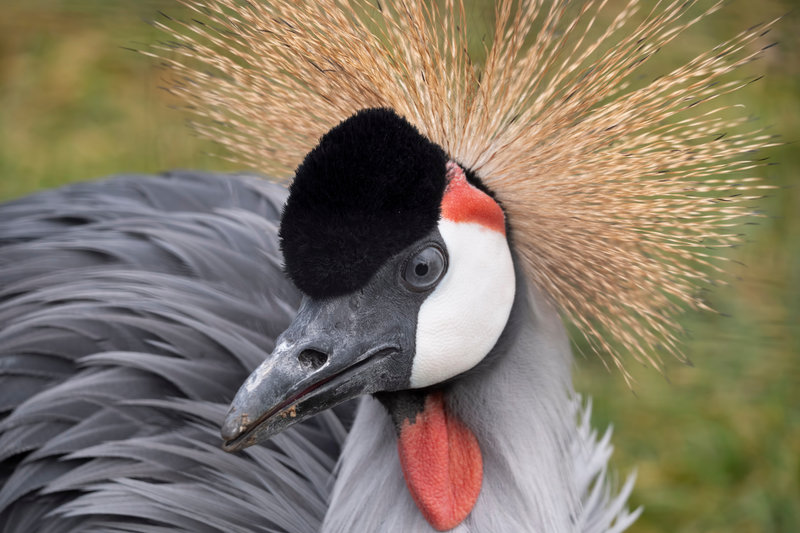
Home › Aves › Gruidae › Sandhill Crane (Antigone canadensis)
SPECIES PROFILE
Sandhill Crane (Antigone canadensis)
Antigone
IUCN STATUS
Least Concern


CONSERVATION STATUS
Least Concern
CLASS
Aves
GEOGRAPHICAL RANGE
Breeds from Alaska and Canada to the Great Lakes and Florida; Platte River valley in Nebraska is the most critical migration stopover
DIET
Omnivore
HABITAT
Breeds in wetland meadows and tundra; uses agricultural fields and prairie during migration; overwinters in Texas and Mexico
🔬 Classification
PHYLUM
Chordata
CLASS
Aves
ORDER
Gruiformes
FAMILY
Gruidae
GENUS
Antigone
📋 Description
SIZE
80–120 cm tall; wingspan 165–230 cm; 3–6 kg
COLORATION
Grey overall with a bare red crown; white cheek patch; drooping bushy tail feathers over the rump; juveniles rusty brown
ADAPTATIONS
Loud rattling call audible from 2 km; coordinated flock migration; elaborate courtship dance involving bowing, jumping, and tossing objects
🌿 Ecology
HABITAT
Breeds in wetland meadows and tundra; uses agricultural fields and prairie during migration; overwinters in Texas and Mexico
DIET
Omnivore
GEOGRAPHIC RANGE
Breeds from Alaska and Canada to the Great Lakes and Florida; Platte River valley in Nebraska is the most critical migration stopover
REPRODUCTION
Monogamous pair performs elaborate dance courtship; 2 eggs in a large grass mound nest in a wetland; chicks (colts) leave the nest within hours
DIET DETAILS
Waste grain (corn) gleaned from agricultural fields on migration; also roots, tubers, insects, and small vertebrates
⚠️ Threats & Conservation
PRIMARY THREATS
Wetland loss reducing migration stopover habitat; collision with power lines; lead poisoning from ingested shot; wind turbines
💡 Interesting Facts
1
The Sandhill Crane's Platte River stopover — involving over 500,000 birds in a 100-km stretch — is one of the greatest wildlife spectacles in the Western Hemisphere.
2
Sandhill Cranes are among the oldest living bird species; fossil evidence shows a near-identical species living in Nebraska 10 million years ago.
🔭 Sighting Guide
📍 BEST PLACES TO SIGHT
Platte River near Kearney, NE, hosts the world's largest congregation of Sandhill Cranes from late February to early April
Bosque del Apache NWR near Socorro, NM, has large Sandhill Crane flocks overwintering from November to February
Jasper-Pulaski Fish and Wildlife Area near Medaryville, IN, hosts Sandhill Crane migration in October and November
🗓️ BEST TIME TO SIGHT
Spring migration. The Platte River in Nebraska hosts 500,000+ Sandhill Cranes in February and March — one of the greatest wildlife spectacles in North America.
🎯 SIGHTING TIPS
Late February to early April along the Platte River near Kearney, NE; dawn and dusk roost flights are spectacular; guided blind tours available.