Home › Reptilia › Cheloniidae › Green Sea Turtle (Chelonia mydas)
SPECIES PROFILE
Green Sea Turtle (Chelonia mydas)
Chelonia
IUCN STATUS
Endangered

CONSERVATION STATUS
Endangered
CLASS
Reptilia
GEOGRAPHICAL RANGE
Tropical and subtropical oceans worldwide; most significant US nesting beaches in Florida; forages throughout Caribbean and Gulf of Mexico
DIET
Herbivore
HABITAT
Tropical and subtropical coastal waters, seagrass beds, and coral reefs; females return to natal beaches to nest
🔬 Classification
PHYLUM
Chordata
CLASS
Reptilia
ORDER
Testudines
FAMILY
Cheloniidae
GENUS
Chelonia
📋 Description
SIZE
1.0–1.2 m carapace; 150–190 kg
COLORATION
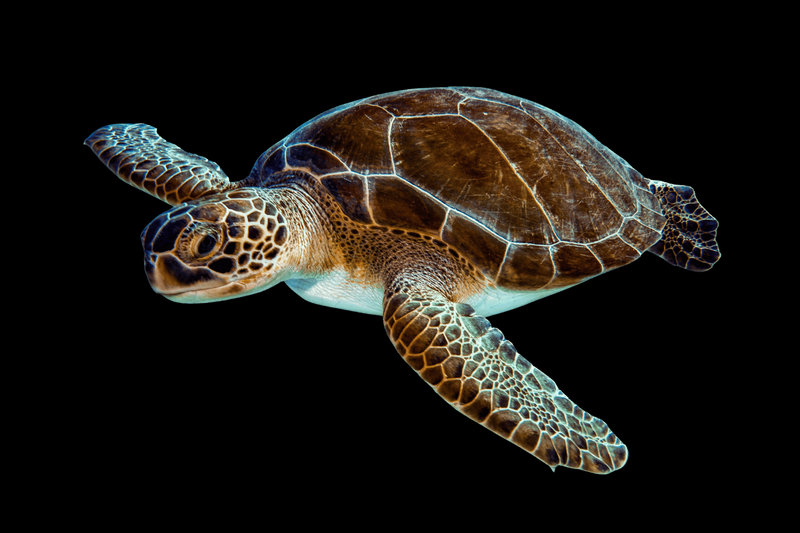
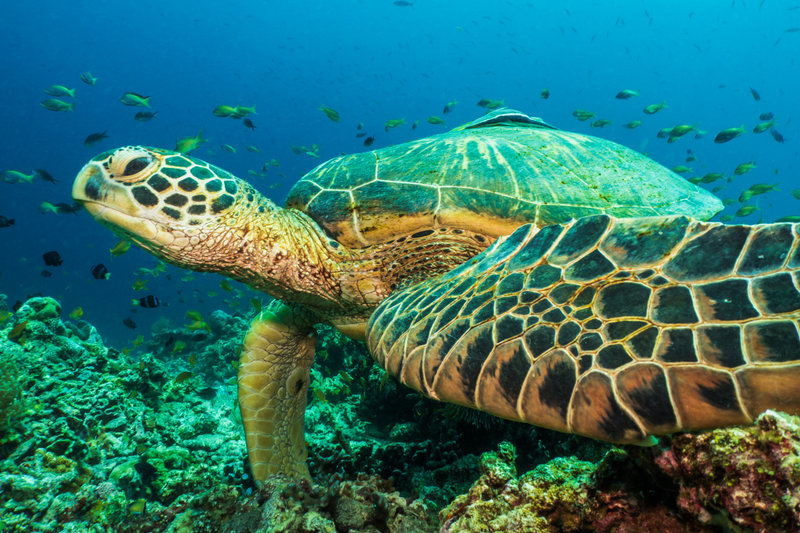
Smooth olive to brown carapace with lighter radiating lines; white to pale yellow underside; small blunt head with a non-hooked bill
ADAPTATIONS
Can hold breath for up to 7 hours while resting; navigates using Earth's magnetic field to return to natal beach after decades at sea
🌿 Ecology
HABITAT
Tropical and subtropical coastal waters, seagrass beds, and coral reefs; females return to natal beaches to nest
DIET
Herbivore
GEOGRAPHIC RANGE
Tropical and subtropical oceans worldwide; most significant US nesting beaches in Florida; forages throughout Caribbean and Gulf of Mexico
REPRODUCTION
Female returns to natal beach every 2–5 years to nest; lays 3–5 clutches per season of 80–130 eggs; hatchlings emerge at night
DIET DETAILS
Seagrasses and algae grazed from shallow coastal meadows; juveniles also eat invertebrates
⚠️ Threats & Conservation
PRIMARY THREATS
Bycatch in fishing gear; poaching of eggs and adults; boat strikes; habitat loss at nesting beaches; climate change affecting sand temperatures and sex ratios
💡 Interesting Facts
1
Green Sea Turtles use the Earth's magnetic field as a GPS system — females imprint on the precise magnetic signature of their natal beach and return decades later to nest within metres of where they hatched.
2
Climate change is threatening Green Sea Turtles in a unique way — the sex of hatchlings is determined by sand temperature during incubation, and warming beaches are producing almost exclusively female offspring.
🔭 Sighting Guide
📍 BEST PLACES TO SIGHT
Archie Carr National Wildlife Refuge near Melbourne Beach, FL, is one of the most important sea turtle nesting beaches in the world
Dry Tortugas National Park near Key West, FL, has Green Sea Turtles foraging around seagrass beds
Canaveral National Seashore near Titusville, FL, has Green Sea Turtle nesting beaches adjacent to Kennedy Space Center
🗓️ BEST TIME TO SIGHT
June to September for nighttime nesting and early morning emergence of hatchlings; Archie Carr NWR near Melbourne, FL, hosts thousands of nests per season.
🎯 SIGHTING TIPS
Summer nesting. Female Green Sea Turtles nest on Florida's Atlantic beaches from May to September; Archie Carr NWR is the most important site.