Home › Aves › Psittacidae › Scarlet Macaw (Ara macao)
SPECIES PROFILE
Scarlet Macaw (Ara macao)
Ara
IUCN STATUS
Least Concern


CONSERVATION STATUS
Least Concern
CLASS
Aves
GEOGRAPHICAL RANGE
Southern Mexico through Central America to Bolivia and Brazil; in Mexico restricted to a small area of Chiapas near the Guatemalan border
DIET
Herbivore
HABITAT
Lowland and foothill tropical rainforest with large fruiting trees and cliff nest sites; requires old-growth forest for both foraging and nesting
🔬 Classification
PHYLUM
Chordata
CLASS
Aves
ORDER
Psittaciformes
FAMILY
Psittacidae
GENUS
Ara
📋 Description
SIZE
81–96 cm including tail; 900–1,100 g
COLORATION
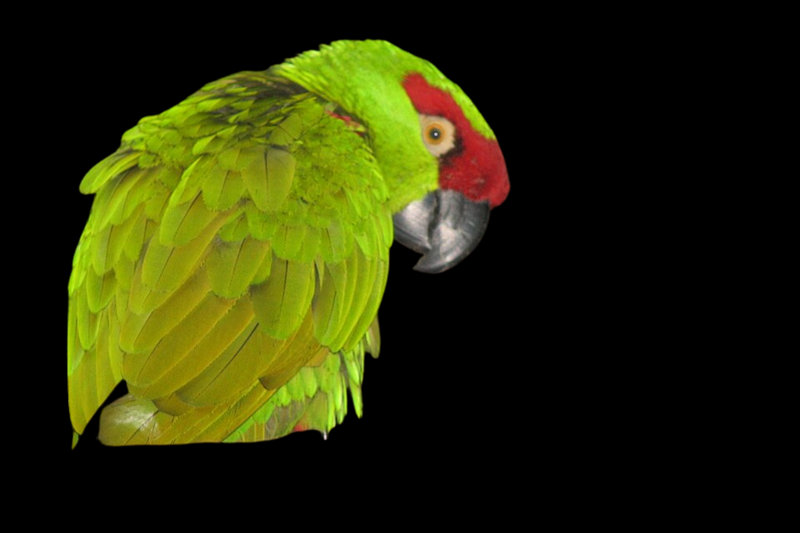
Brilliant scarlet red head, body, and upper wings; yellow median wing coverts with green tips; blue lower wings and rump; white bare facial patch with red feather lines
ADAPTATIONS
Strong curved bill for cracking hard nuts; visits mineral-rich clay licks to detoxify secondary plant compounds; mates for life with coordinated pair movements
🌿 Ecology
HABITAT
Lowland and foothill tropical rainforest with large fruiting trees and cliff nest sites; requires old-growth forest for both foraging and nesting
DIET
Herbivore
GEOGRAPHIC RANGE
Southern Mexico through Central America to Bolivia and Brazil; in Mexico restricted to a small area of Chiapas near the Guatemalan border
REPRODUCTION
Nests in a tree cavity or cliff crevice; 1–4 eggs; incubation 24–28 days; chick development takes 3 months; mates for life
DIET DETAILS
Fruits, seeds, nuts, and flowers; travels long distances to fruiting trees; visits clay licks to eat mineral-rich clay
⚠️ Threats & Conservation
PRIMARY THREATS
Capture for the illegal pet trade has decimated Mexican populations; deforestation of old-growth rainforest; disturbance at nest sites
💡 Interesting Facts
1
The Scarlet Macaw's range has contracted dramatically in Mexico — it was formerly widespread across the Gulf lowlands; today it survives only in the far south of Chiapas, close to the Guatemalan border.
2
Scarlet Macaws mate for life and the bond is maintained by mutual preening and synchronised flight; pairs are rarely more than a few metres apart, even when foraging in a large flock.
🔭 Sighting Guide
📍 BEST PLACES TO SIGHT
Bonampak and Yaxchilán ruins near Frontera Corozal, Chiapas, have Scarlet Macaws in surrounding Lacandon rainforest
Frontera Corozal on the Usumacinta River, Chiapas, is a base for river trips through Scarlet Macaw habitat
Montes Azules Biosphere Reserve, Chiapas, has Scarlet Macaws in protected primary rainforest near the Lacandon community
🗓️ BEST TIME TO SIGHT
Year-round. The Lacandon rainforest of Chiapas and the Usumacinta River corridor have Mexico's only remaining wild Scarlet Macaw population.
🎯 SIGHTING TIPS
Year-round near Bonampak ruins and the Usumacinta River, Chiapas; morning and late afternoon flights between roosting cliffs and foraging trees.