Home › Aves › Psittacidae › Great Green Macaw (Ara ambiguus)
SPECIES PROFILE
Great Green Macaw (Ara ambiguus)
Ara
IUCN STATUS
Critically Endangered


CONSERVATION STATUS
Critically Endangered
CLASS
Aves
GEOGRAPHICAL RANGE
Honduras south through Nicaragua, Costa Rica, and Panama to Colombia and Ecuador; highly fragmented.
DIET
Herbivore
HABITAT
Lowland and foothill tropical rainforest closely tied to the presence of almendro (Dipteryx oleifera) trees.
🔬 Classification
PHYLUM
Chordata
CLASS
Aves
ORDER
Psittaciformes
FAMILY
Psittacidae
GENUS
Ara
📋 Description
SIZE
Large parrot 85–90 cm long; one of the largest macaws in Central America.
COLORATION
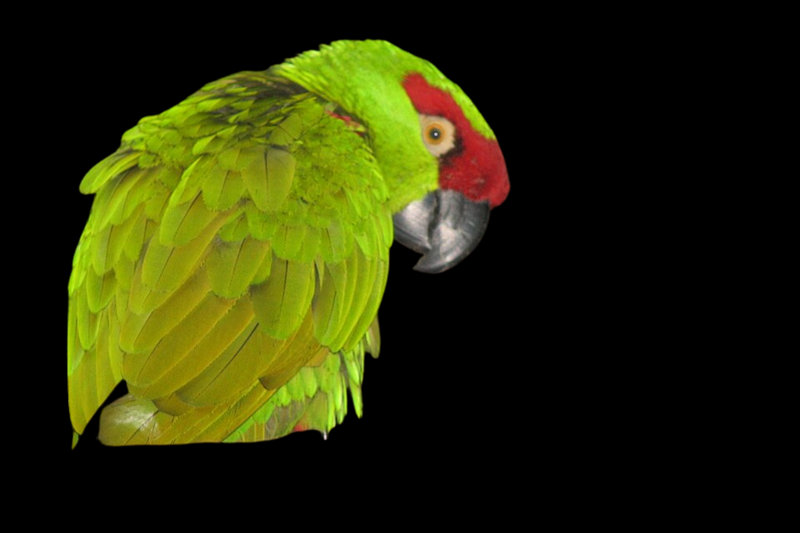
Brilliant green body with red forehead, blue flight feathers, and a red-and-blue tail; bare white facial patch with red streaks.
ADAPTATIONS
Strong hooked bill for cracking hard nuts; zygodactyl feet for gripping branches and manoeuvring through canopy.
🌿 Ecology
HABITAT
Lowland and foothill tropical rainforest closely tied to the presence of almendro (Dipteryx oleifera) trees.
DIET
Herbivore
GEOGRAPHIC RANGE
Honduras south through Nicaragua, Costa Rica, and Panama to Colombia and Ecuador; highly fragmented.
REPRODUCTION
Nest in cavities of large almendro trees; 1–3 eggs per clutch; incubation ~28 days; chicks fledge at ~3 months.
DIET DETAILS
Almost exclusively seeds, nuts, and fruits of the almendro tree; also figs and other hard-shelled forest fruits.
⚠️ Threats & Conservation
PRIMARY THREATS
Deforestation eliminating almendro trees, trapping for pet trade, and nest-site competition.
💡 Interesting Facts
1
The fate of this species is almost entirely tied to one tree species — if almendro disappears, the macaw follows.
2
Fewer than 1,500 individuals remain in the wild, making it one of the rarest macaws on Earth.
🔭 Sighting Guide
📍 BEST PLACES TO SIGHT
BOSAWÁS Biosphere Reserve in northern Nicaragua contains the largest remaining population with guided birding tours available.
Indio Maíz Biological Reserve in southeastern Nicaragua offers multi-day expeditions for Great Green Macaw sightings.
Río Sarapiquí corridor in northern Costa Rica, accessible from Nicaraguan border, is a stronghold for this species.
🗓️ BEST TIME TO SIGHT
Visit old-growth forest edges at dawn; macaws call loudly and fly in pairs — listen for raucous screams before spotting them.
🎯 SIGHTING TIPS
December–April when almendro trees fruit and macaws concentrate to feed.