Home › Reptilia › Viperidae › Western Diamondback Rattlesnake (Crotalus atrox)
SPECIES PROFILE
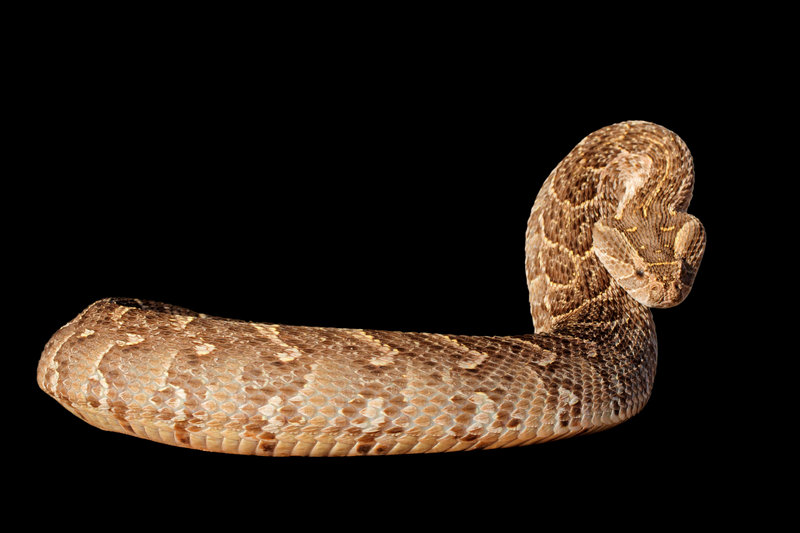
Western Diamondback Rattlesnake (Crotalus atrox)
Crotalus
IUCN STATUS
Least Concern


CONSERVATION STATUS
Least Concern
CLASS
Reptilia
GEOGRAPHICAL RANGE
Southwestern US from central California to Arkansas, south through Mexico; the most medically significant rattlesnake in North America
DIET
Carnivore
HABITAT
Desert scrub, rocky hillsides, grasslands, and brushy areas throughout the Southwest; a generalist habitat user
🔬 Classification
PHYLUM
Chordata
CLASS
Reptilia
ORDER
Squamata
FAMILY
Viperidae
GENUS
Crotalus
📋 Description
SIZE
1.2–2.1 m; 1.8–6.7 kg — the largest rattlesnake in the western US
COLORATION
Grey to brown with distinct diamond-shaped darker blotches along the back; black-and-white banded tail ending in a segmented rattle; arrow-shaped head
ADAPTATIONS
Heat-sensing pit organs detect warm-blooded prey in complete darkness; hollow fangs inject haemotoxic venom; rattle used as a warning device
🌿 Ecology
HABITAT
Desert scrub, rocky hillsides, grasslands, and brushy areas throughout the Southwest; a generalist habitat user
DIET
Carnivore
GEOGRAPHIC RANGE
Southwestern US from central California to Arkansas, south through Mexico; the most medically significant rattlesnake in North America
REPRODUCTION
Viviparous; 4–25 live young born August to October; young venomous immediately at birth; no parental care
DIET DETAILS
Primarily small mammals (mice, rats, rabbits); also lizards and birds; ambush predator
⚠️ Threats & Conservation
PRIMARY THREATS
Persecution and intentional killing; road mortality; collection for the pet trade; habitat loss
💡 Interesting Facts
1
The Western Diamondback is responsible for more snakebite fatalities in the US than any other species; its haemotoxic venom destroys red blood cells and tissue.
2
Rattlesnakes do not add a new rattle segment each year — they add one every time they shed, which can be multiple times annually; a rattle can break off entirely, making it an unreliable age indicator.
🔭 Sighting Guide
📍 BEST PLACES TO SIGHT
Big Bend National Park near Terlingua, TX, has Western Diamondback Rattlesnakes in rocky desert habitat
Saguaro National Park West near Tucson, AZ, has Western Diamondbacks along rocky desert trails
Chihuahuan Desert Nature Park near Las Cruces, NM, has Western Diamondbacks in Chihuahuan Desert scrub
🗓️ BEST TIME TO SIGHT
Spring to autumn. Active April to October; most commonly encountered on rocky desert trails and roadsides at dawn and dusk.
🎯 SIGHTING TIPS
April to October along rocky desert paths in Big Bend National Park and Saguaro National Park; most active at dusk in hot summer months.