
Home › Mammalia › Cervidae › Roosevelt Elk (Cervus canadensis roosevelti)
SPECIES PROFILE
Roosevelt Elk (Cervus canadensis roosevelti)
Cervus
IUCN STATUS
Least Concern

CONSERVATION STATUS
Least Concern
CLASS
Mammalia
GEOGRAPHICAL RANGE
Pacific Northwest coast from northern California to British Columbia; largest population on the Olympic Peninsula
DIET
Herbivore
HABITAT
Temperate rainforest, coastal meadows, and subalpine clearings of the Olympic Peninsula and Oregon Coast Range
🔬 Classification
PHYLUM
Chordata
CLASS
Mammalia
ORDER
Artiodactyla
FAMILY
Cervidae
GENUS
Cervus
📋 Description
SIZE
Bulls 320–500 kg, antler spread up to 1.5 m; cows 170–280 kg
COLORATION
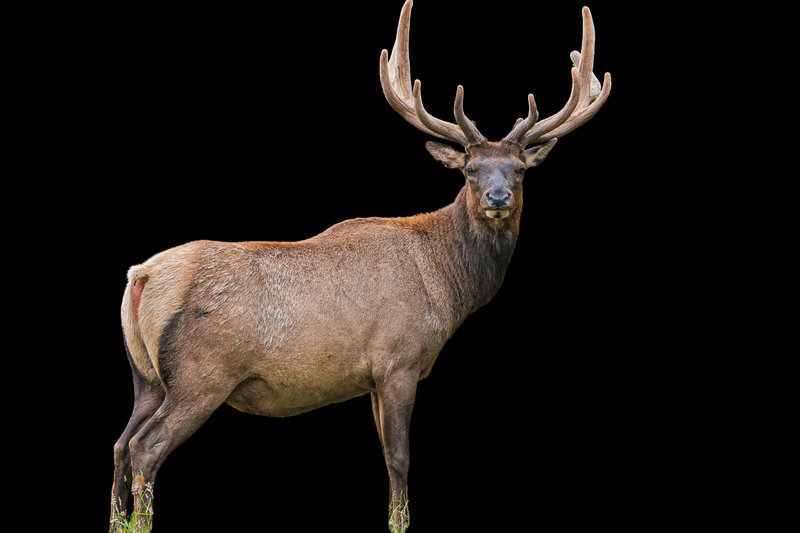
Rich dark brown mane and neck; tawny body; large buff rump patch; bulls carry massive multi-pointed antlers shed each spring
ADAPTATIONS
Largest subspecies of elk; well-adapted to temperate rainforest; bulls use bugling calls to establish dominance during rut
🌿 Ecology
HABITAT
Temperate rainforest, coastal meadows, and subalpine clearings of the Olympic Peninsula and Oregon Coast Range
DIET
Herbivore
GEOGRAPHIC RANGE
Pacific Northwest coast from northern California to British Columbia; largest population on the Olympic Peninsula
REPRODUCTION
Rut September to October with dominant bulls herding harems; single calf born May to June; calves spotted at birth
DIET DETAILS
Grasses, sedges, ferns, and shrubs; browses heavily on vine maple, red alder, and huckleberry
⚠️ Threats & Conservation
PRIMARY THREATS
Habitat fragmentation; vehicle collisions; hunting outside park boundaries; historical decline from over-hunting
💡 Interesting Facts
1
Roosevelt Elk are the largest elk subspecies in North America; a mature bull can weigh over 500 kg and produce a bugle audible over 1 km.
2
The Hoh Rain Forest herd in Olympic National Park is one of the most studied elk populations in the world, known for its exceptional antler size due to the nutrient-rich rainforest vegetation.
🔭 Sighting Guide
📍 BEST PLACES TO SIGHT
Hoh Rain Forest visitor area in Olympic National Park, WA, has habituated Roosevelt Elk along the rain forest trails
Prairie de la Prairie near Lake Quinault in Olympic National Park, WA, has open meadow elk herds
Prairie Creek Redwoods State Park near Orick, CA, has abundant Roosevelt Elk in coastal meadows
🗓️ BEST TIME TO SIGHT
Year-round. Olympic National Park and the Hoh Rain Forest have habituated herds; bugling rut occurs September to October.
🎯 SIGHTING TIPS
September and October for bugling bulls during the rut; Prairie de la Prairie in Olympic NP has open meadow herds visible year-round.


