Home › Mammalia › Bovidae › Bighorn Sheep (Ovis canadensis)
SPECIES PROFILE
Bighorn Sheep (Ovis canadensis)
Ovis
IUCN STATUS
Least Concern

CONSERVATION STATUS
Least Concern
CLASS
Mammalia
GEOGRAPHICAL RANGE
Rocky Mountains from southern BC to New Mexico; desert subspecies in the Southwest; isolated herds throughout the Rockies
DIET
Herbivore
HABITAT
Rocky alpine and subalpine slopes, cliffs, and canyon walls; steep terrain provides escape from predators
🔬 Classification
PHYLUM
Chordata
CLASS
Mammalia
ORDER
Artiodactyla
FAMILY
Bovidae
GENUS
Ovis
📋 Description
SIZE
Rams 58–143 kg; ewes 34–91 kg; horns up to 1.1 m in length and 14 kg in mature rams
COLORATION
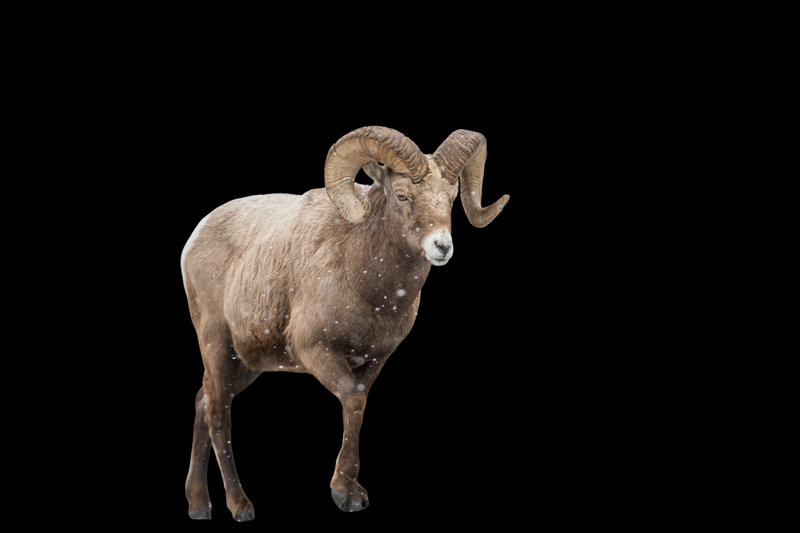
Light brown to grey-brown with a white rump patch and muzzle; males carry massive coiled horns; females have shorter spiked horns
ADAPTATIONS
Specialized split hooves with hard outer edges and soft inner pads providing grip on rocky terrain; keen eyesight detecting movement at 1 km
🌿 Ecology
HABITAT
Rocky alpine and subalpine slopes, cliffs, and canyon walls; steep terrain provides escape from predators
DIET
Herbivore
GEOGRAPHIC RANGE
Rocky Mountains from southern BC to New Mexico; desert subspecies in the Southwest; isolated herds throughout the Rockies
REPRODUCTION
Rut November to December; rams compete by charging at up to 50 km/h and clashing horns; single lamb born in spring
DIET DETAILS
Grasses, sedges, forbs, and shrubs; descends to lower elevations in winter when high-country snow is deep
⚠️ Threats & Conservation
PRIMARY THREATS
Respiratory disease (pneumonia) from contact with domestic sheep; mountain lion predation; habitat fragmentation
💡 Interesting Facts
1
A bighorn ram's crash during the rut can be heard from over 1 km away; repeated charges continue for hours until one ram submits.
2
The horns of a mature Bighorn ram can weigh more than all the other bones in its body combined; they are never shed and grow throughout life.
🔭 Sighting Guide
📍 BEST PLACES TO SIGHT
Gardiner, MT, at the north entrance of Yellowstone has Bighorn Sheep on rocky hillsides visible from the road
Rocky Mountain National Park near Estes Park, CO, has Bighorn Sheep on Trail Ridge Road and Fall River Pass
Mount Washburn in Yellowstone National Park, WY, has Bighorn Sheep on the summit slopes year-round
🗓️ BEST TIME TO SIGHT
November and December for rut head-clashing behaviour near Gardiner, MT; year-round on Mount Washburn in Yellowstone and Rocky Mountain NP, CO.
🎯 SIGHTING TIPS
Year-round on rocky alpine terrain; rut in November and December brings dramatic head-butting displays on ridgelines.