Home › Mammalia › Ursidae › Brown Bear (Ursus arctos)
SPECIES PROFILE
Brown Bear (Ursus arctos)
Ursus
IUCN STATUS
Least Concern


CONSERVATION STATUS
Least Concern
CLASS
Mammalia
GEOGRAPHICAL RANGE
Circumpolar; in North America from Alaska through western Canada; Kodiak Island has the world's largest subspecies
DIET
Omnivore
HABITAT
Diverse Alaskan habitats: coastal meadows, salmon rivers, tundra, and spruce-birch forest
🔬 Classification
PHYLUM
Chordata
CLASS
Mammalia
ORDER
Carnivora
FAMILY
Ursidae
GENUS
Ursus
📋 Description
SIZE
Males 180–360 kg; females 130–200 kg; coastal "Brown Bears" fed on salmon average larger than interior Grizzlies
COLORATION
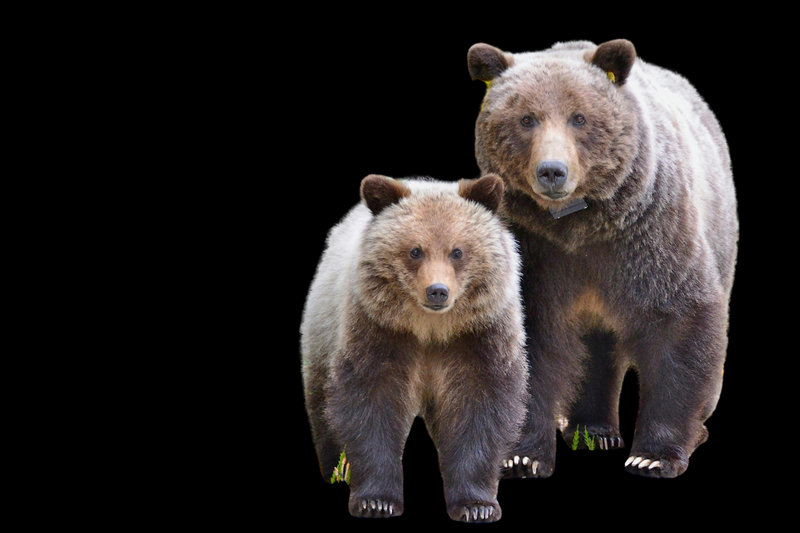
Brown to blond to dark brown coat; prominent shoulder hump; dished facial profile; long front claws; coastal individuals may be very large
ADAPTATIONS
Hyperphagia in autumn allows storing 180 kg of fat for winter denning; powerful digging ability; excellent sense of smell
🌿 Ecology
HABITAT
Diverse Alaskan habitats: coastal meadows, salmon rivers, tundra, and spruce-birch forest
DIET
Omnivore
GEOGRAPHIC RANGE
Circumpolar; in North America from Alaska through western Canada; Kodiak Island has the world's largest subspecies
REPRODUCTION
Females give birth to 1–4 cubs in the den in January; cubs emerge in spring and stay with mother 2.5 years
DIET DETAILS
Salmon (July to September) is the most calorically important food; also sedge grass, berries, ground squirrels, moose calves, and carrion
⚠️ Threats & Conservation
PRIMARY THREATS
Conflict with humans near communities; hunting; salmon run failures reducing pre-den nutrition; climate change reducing berry crops
💡 Interesting Facts
1
The Brown Bears of Katmai National Park gather at Brooks Falls where they develop highly individual fishing techniques — including plunge-diving, still-hunting, and piracy from other bears.
2
A single Brown Bear in prime Alaskan habitat will consume up to 20,000 calories per day during hyperphagia to accumulate the fat reserves needed to survive winter denning without food.
🔭 Sighting Guide
📍 BEST PLACES TO SIGHT
Brooks Falls in Katmai National Park near King Salmon, AK, is the best place in the world to see Brown Bears catching salmon
McNeil River State Game Sanctuary near King Salmon, AK, has the world's highest concentration of Brown Bears by permit only
Denali National Park near Healy, AK, has Brown Bears visible in open tundra from the park road
🗓️ BEST TIME TO SIGHT
Summer to autumn. McNeil River and Katmai National Park have the world's highest concentrations of bears fishing for salmon in July and September.
🎯 SIGHTING TIPS
July at Brooks Falls in Katmai for bears catching sockeye salmon mid-leap; September at Brooks River for fat bears preparing for hibernation.