Home › Aves › Gruidae › Siberian Crane (Leucogeranus leucogeranus)
SPECIES PROFILE
Siberian Crane (Leucogeranus leucogeranus)
Leucogeranus
IUCN STATUS
Critically Endangered

CONSERVATION STATUS
Critically Endangered
CLASS
Aves
GEOGRAPHICAL RANGE
Migratory: Winters in Keoladeo National Park, Rajasthan
DIET
Omnivorous
HABITAT
Wetlands, marshes
🔬 Classification
PHYLUM
Chordata
CLASS
Aves
ORDER
Gruiformes
FAMILY
Gruidae
GENUS
Leucogeranus
📋 Description
SIZE
1.4 meters tall, wingspan 2.1-2.3 meters, 4.9-8.6 kg
COLORATION
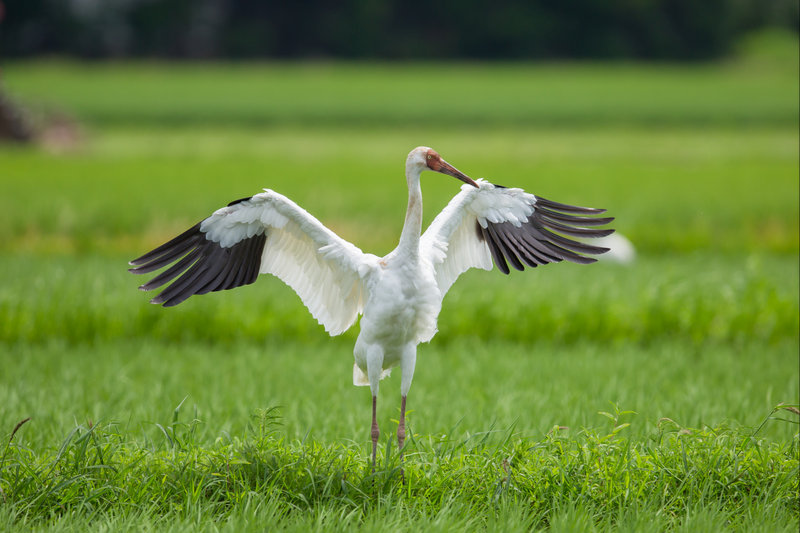
White with black wingtips, red face patch
ADAPTATIONS
Long legs for wading, strong wings for migration
🌿 Ecology
HABITAT
Wetlands, marshes
DIET
Omnivorous
GEOGRAPHIC RANGE
Migratory: Winters in Keoladeo National Park, Rajasthan
REPRODUCTION
Lays 2 eggs, incubated 29 days
DIET DETAILS
Aquatic plants, roots, small fish, insects
⚠️ Threats & Conservation
PRIMARY THREATS
Wetland drainage, hunting along migration route
💡 Interesting Facts
1
Epic Migrants: Flying 5000 km from Siberia their 2-meter wings wintered in Keoladeo with 100 left globally. Wetland loss nearly ended their Indian visits.
2
Rare Visitors: Once revered in Rajasthan's folklore their 140 cm bodies dance in pairs with 200 eggs lifetime. Conservation restores their 500 sq km wetland stopovers.
🔭 Sighting Guide
📍 BEST PLACES TO SIGHT
Keoladeo National Park in Rajasthan is a historical wintering ground for crane sightings
Bharatpur Bird Sanctuary in Rajasthan wetlands offer rare crane sightings
Chilika Lake in Odisha brackish waters host occasional crane sightings
🗓️ BEST TIME TO SIGHT
October-March. Winter migration brings cranes to wetlands for feeding.
🎯 SIGHTING TIPS
Visit wetlands at dawn with birding guides to see cranes foraging.