Home › Mammalia › Tayassuidae › Collared Peccary / Javelina (Pecari tajacu)
SPECIES PROFILE
Collared Peccary / Javelina (Pecari tajacu)
Pecari
IUCN STATUS
Least Concern

CONSERVATION STATUS
Least Concern
CLASS
Mammalia
GEOGRAPHICAL RANGE
Southwestern US from Texas to Arizona south through Central America to Argentina
DIET
Omnivore
HABITAT
Desert scrub, thornscrub, and oak woodland throughout the Southwest; highly adaptable to urban edges
🔬 Classification
PHYLUM
Chordata
CLASS
Mammalia
ORDER
Artiodactyla
FAMILY
Tayassuidae
GENUS
Pecari
📋 Description
SIZE
75–100 cm body length; 14–30 kg
COLORATION
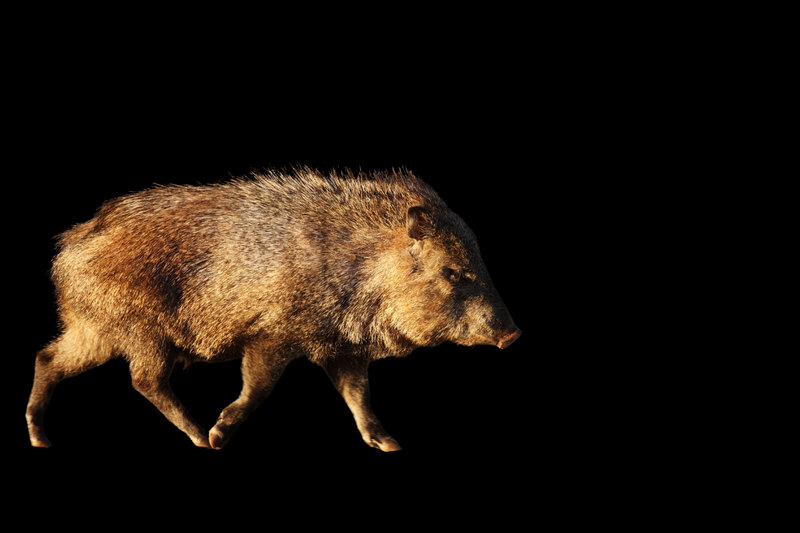
Salt-and-pepper grey coat with a whitish collar (the "necklace"); pig-like body but not a true pig; prominent tusks; short tufted tail
ADAPTATIONS
Specialised digestive system breaks down prickly pear cactus including spines; musky scent gland on rump used for communication; runs rapidly on slender legs
🌿 Ecology
HABITAT
Desert scrub, thornscrub, and oak woodland throughout the Southwest; highly adaptable to urban edges
DIET
Omnivore
GEOGRAPHIC RANGE
Southwestern US from Texas to Arizona south through Central America to Argentina
REPRODUCTION
Year-round breeding; 1–4 young born after 145-day gestation; young follow the herd within hours of birth
DIET DETAILS
Prickly pear cactus (including pads and spines) is the dietary staple; also roots, bulbs, berries, grubs, and small vertebrates
⚠️ Threats & Conservation
PRIMARY THREATS
Hunting in some states; vehicle collisions; habitat loss from urbanisation
💡 Interesting Facts
1
Javelinas are not pigs — they belong to a separate family (Tayassuidae) that split from pigs over 30 million years ago; they lack the pig's ability to sweat and have a limited temperature range.
2
Javelinas rub their rump scent glands on rocks and trees to mark territory; herds of 6–20 individuals stay cohesive by recognising each other's individual scent signatures.
🔭 Sighting Guide
📍 BEST PLACES TO SIGHT
Big Bend National Park near Terlingua, TX, has habituated Javelina herds around the Chisos Basin visitor area
Saguaro National Park East near Tucson, AZ, has Javelina herds frequently seen on desert trails
Catalina State Park near Tucson, AZ, has Javelinas visible near the picnic areas and trail heads
🗓️ BEST TIME TO SIGHT
Year-round in Big Bend National Park and Saguaro National Park; most active at dawn and dusk; Chisos Basin campground has habituated herds.
🎯 SIGHTING TIPS
Year-round. Most active at dawn and dusk; herds are commonly seen around campgrounds in Big Bend and Saguaro National Parks.
🏨 Where to Stay
🐾 You Might Also Want to See...

Species
Range
Status
Species
Range
Status
Species
Range
Status
Species
Range
Status