Home › Amphibia › Telmatobiidae › Titicaca Water Frog (Telmatobius culeus)
SPECIES PROFILE
Titicaca Water Frog (Telmatobius culeus)
Telmatobius
IUCN STATUS
Endangered

CONSERVATION STATUS
Endangered
CLASS
Amphibia
GEOGRAPHICAL RANGE
Endemic to Lake Titicaca
DIET
Carnivorous
HABITAT
Cold high-altitude lake (3,800 m)
🔬 Classification
PHYLUM
Chordata
CLASS
Amphibia
ORDER
Anura
FAMILY
Telmatobiidae
GENUS
Telmatobius
📋 Description
SIZE
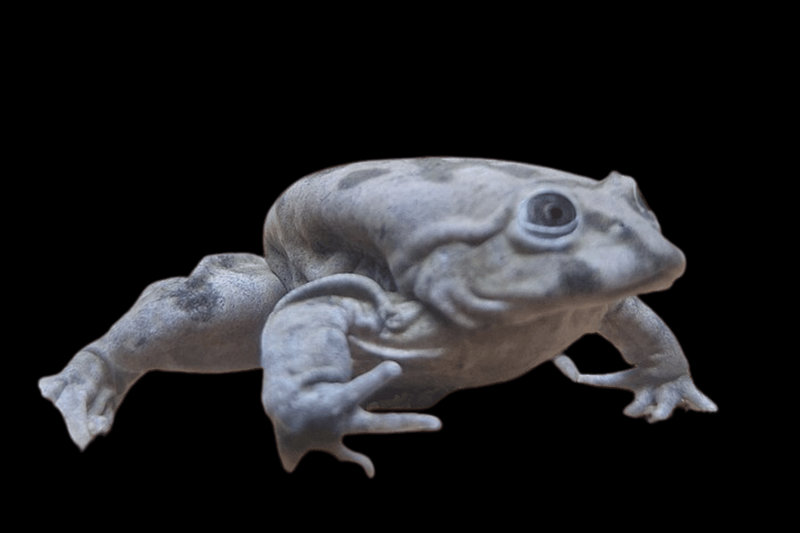
Up to 20 cm; among the largest fully aquatic frogs
COLORATION
Olive to dark brown with baggy, folded skin
ADAPTATIONS
Excess skin folds absorb oxygen so it never needs to surface
🌿 Ecology
HABITAT
Cold high-altitude lake (3,800 m)
DIET
Carnivorous
GEOGRAPHIC RANGE
Endemic to Lake Titicaca
REPRODUCTION
Lays eggs on submerged rocks
DIET DETAILS
Snails, insects, small fish and amphipods
⚠️ Threats & Conservation
PRIMARY THREATS
Pollution, harvesting, introduced trout
💡 Interesting Facts
1
Nicknamed the 'scrotum frog' for its baggy skin, which lets it breathe entirely underwater.
2
It is one of the largest exclusively aquatic frogs on Earth and never leaves the water.
🔭 Sighting Guide
📍 BEST PLACES TO SIGHT
Lake Titicaca (Uros/Copacabana)
🗓️ BEST TIME TO SIGHT
Year-round
🎯 SIGHTING TIPS
Best seen with local conservation guides on Lake Titicaca; they live in the cold, deep lake waters.
🐾 You Might Also Want to See...

Species
Range
Status
Species
Range
Status
Species
Range
Status
Species
Range
Status