Home › Mammalia › Ursidae › Sloth Bear (Melursus ursinus)
SPECIES PROFILE
Sloth Bear (Melursus ursinus)
Melursus
IUCN STATUS
Vulnerable

CONSERVATION STATUS
Vulnerable
CLASS
Mammalia
GEOGRAPHICAL RANGE
Widespread across India, from Gujarat to Assam, south to Karnataka
DIET
Omnivorous
HABITAT
Dry and moist forests, grasslands
🔬 Classification
PHYLUM
Chordata
CLASS
Mammalia
ORDER
Carnivora
FAMILY
Ursidae
GENUS
Melursus
📋 Description
SIZE
1.4-1.9 meters long, 55-145 kg; males larger
COLORATION
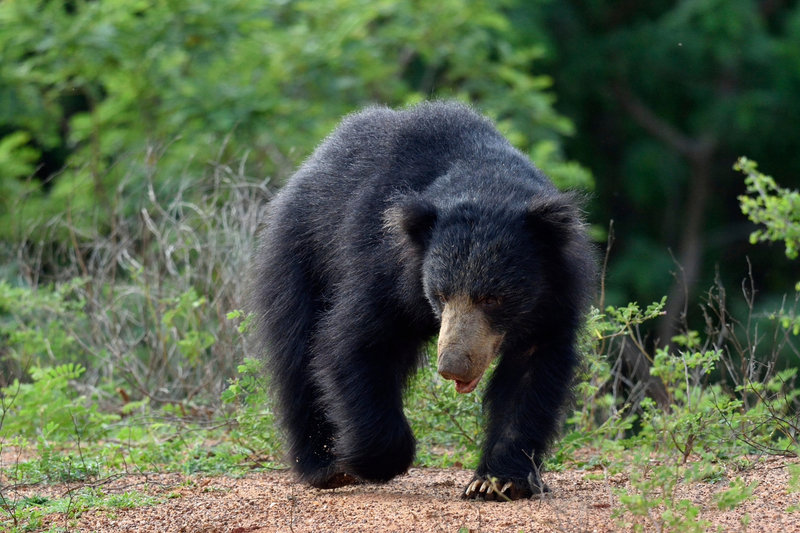
Shaggy black fur, white V-shaped chest mark, long snout
ADAPTATIONS
Lips and tongue for sucking termites, claws for digging
🌿 Ecology
HABITAT
Dry and moist forests, grasslands
DIET
Omnivorous
GEOGRAPHIC RANGE
Widespread across India, from Gujarat to Assam, south to Karnataka
REPRODUCTION
Females gestate 6-7 months, birthing 1-3 cubs; cubs ride mother's back
DIET DETAILS
Termites, ants, fruits, honey; occasional scavenging
⚠️ Threats & Conservation
PRIMARY THREATS
Habitat loss, poaching, human-bear conflict
💡 Interesting Facts
1
Noisy Feeders: Sucking termites with 100-decibel slurps in Daroji's forests their 140 kg bodies dig 2-meter mounds with 10000 in India. Cubs ride mothers' backs uniquely.
2
Forest Foragers: Eating 10 kg of ants daily in Satpura's hills their shaggy fur resists bites in Panna's scrublands. Deforestation threatens their 10000 sq km range.
🔭 Sighting Guide
📍 BEST PLACES TO SIGHT
Daroji Sloth Bear Sanctuary in Karnataka dedicated habitat hosts bear sightings
Satpura National Park in Madhya Pradesh forested hills offer bear sightings
Panna National Park in Madhya Pradesh dry forests have bear sightings
🗓️ BEST TIME TO SIGHT
November-March. Dry season concentrates bears near water and fruit trees.
🎯 SIGHTING TIPS
Join safaris at dusk to see bears