Home › Aves › Corvidae › Steller's Jay (Cyanocitta stelleri)
SPECIES PROFILE
Steller's Jay (Cyanocitta stelleri)
Cyanocitta
IUCN STATUS
Least Concern

CONSERVATION STATUS
Least Concern
CLASS
Aves
GEOGRAPHICAL RANGE
Pacific coast and mountains from southern Alaska to Nicaragua; BC is the northern core of its range
DIET
Omnivore
HABITAT
Coniferous and mixed forests from sea level to subalpine; parks and suburban areas adjacent to forest
🔬 Classification
PHYLUM
Chordata
CLASS
Aves
ORDER
Passeriformes
FAMILY
Corvidae
GENUS
Cyanocitta
📋 Description
SIZE
30–34 cm; 100–140 g
COLORATION
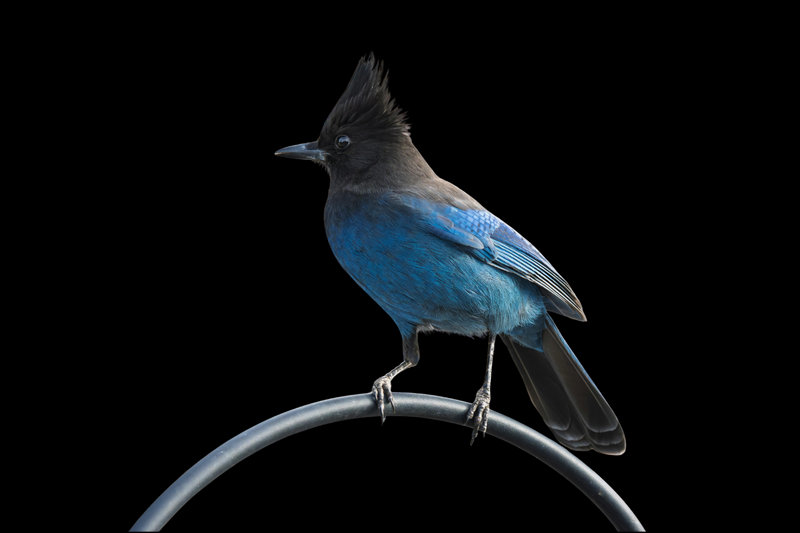
Deep blue body with a sooty-black head and a prominent crest; white streaking on the forehead
ADAPTATIONS
Highly intelligent corvid; excellent mimic of other birds and mechanical sounds; strong spatial memory for food caches
🌿 Ecology
HABITAT
Coniferous and mixed forests from sea level to subalpine; parks and suburban areas adjacent to forest
DIET
Omnivore
GEOGRAPHIC RANGE
Pacific coast and mountains from southern Alaska to Nicaragua; BC is the northern core of its range
REPRODUCTION
Monogamous pairs build a cup nest of mud and plant material in a conifer; 3–5 eggs; both parents incubate
DIET DETAILS
Acorns, seeds, berries, insects, eggs, and human food scraps; stores acorns in caches for winter
⚠️ Threats & Conservation
PRIMARY THREATS
Habitat fragmentation; predation by domestic cats near urban edges; generally stable population
💡 Interesting Facts
1
The Steller's Jay is the provincial bird of BC and the only crested jay found west of the Rocky Mountains.
2
It can accurately mimic Red-tailed Hawks and Bald Eagles, which it sometimes uses to drive other birds from food sources.
🔭 Sighting Guide
📍 BEST PLACES TO SIGHT
Garibaldi Provincial Park near Squamish, BC, has bold Steller's Jays around the visitor centre and campgrounds
Pacific Rim National Park near Tofino, BC, is home to resident Steller's Jays in old-growth forest
Manning Provincial Park in the BC Interior has approachable Steller's Jays at picnic areas year-round
🗓️ BEST TIME TO SIGHT
Easily seen year-round in BC's coastal and mountain forests; particularly approachable at campgrounds in Garibaldi and Manning Provincial Parks.
🎯 SIGHTING TIPS
Year-round. Resident in conifer forests; bold individuals visit campgrounds and feeders in provincial parks throughout the year.