Home › Mammalia › Odobenidae › Atlantic Walrus (Odobenus rosmarus rosmarus)
SPECIES PROFILE
Atlantic Walrus (Odobenus rosmarus rosmarus)
Odobenus
IUCN STATUS
Vulnerable


CONSERVATION STATUS
Vulnerable
CLASS
Mammalia
GEOGRAPHICAL RANGE
Atlantic Arctic from Canada's eastern Arctic south to Newfoundland; also Greenland, Svalbard, and the Russian Arctic
DIET
Carnivore
HABITAT
Sea ice habitat for resting, pupping, and moulting; forages on the sea floor in shallow Arctic and sub-Arctic waters
������ Classification
PHYLUM
Chordata
CLASS
Mammalia
ORDER
Carnivora
FAMILY
Odobenidae
GENUS
Odobenus
📋 Description
SIZE
Males 900–1,500 kg; females 400–800 kg; tusks up to 1 m in males
COLORATION
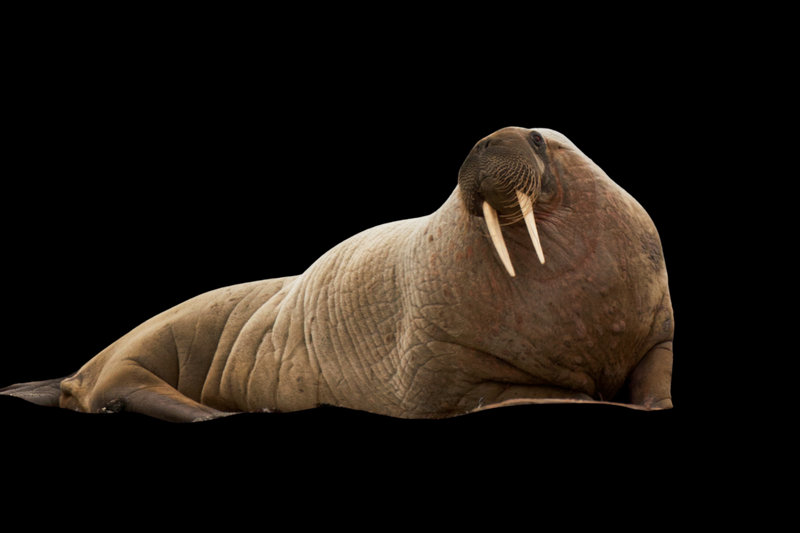
Grey-brown wrinkled skin; sparse hair; massive ivory tusks in both sexes; a wide whisker pad (vibrissae) for detecting molluscs
ADAPTATIONS
Uses tusks to haul out onto ice and as weapons in social competition; whiskers detect clams buried in seafloor sediment
🌿 Ecology
HABITAT
Sea ice habitat for resting, pupping, and moulting; forages on the sea floor in shallow Arctic and sub-Arctic waters
DIET
Carnivore
GEOGRAPHIC RANGE
Atlantic Arctic from Canada's eastern Arctic south to Newfoundland; also Greenland, Svalbard, and the Russian Arctic
REPRODUCTION
Single calf born on sea ice every 2–3 years after 15-month gestation; calf nurses for over a year and stays with mother 2–3 years
DIET DETAILS
Bivalve molluscs (clams) located by whiskers and excavated by water jets; also worms, sea cucumbers, and occasionally seals
⚠️ Threats & Conservation
PRIMARY THREATS
Sea ice loss from climate change removing critical resting and pupping habitat; past commercial hunting severely reduced populations
💡 Interesting Facts
1
Walruses use their tusks to tooth-walk up onto ice floes — the tusk's function is more social and positional than predatory; both sexes bear tusks.
2
Atlantic Walrus were commercially hunted nearly to extinction for oil, ivory, and hide; recovery has been slow and the species remains sensitive to sea ice loss.
🔭 Sighting Guide
📍 BEST PLACES TO SIGHT
Coats Island in northern Hudson Bay, NU, hosts one of Canada's largest summer Atlantic Walrus haul-outs
Frobisher Bay near Iqaluit, NU, has Atlantic Walrus using sea ice and coastal areas seasonally
Nain, NL, is a departure point for guided sea ice walrus expeditions in Labrador waters in spring
🗓️ BEST TIME TO SIGHT
March and April on sea ice off northeast Newfoundland; summer Coats Island walrus haul-outs are accessible only by expedition.
🎯 SIGHTING TIPS
Winter to spring on sea ice off Newfoundland and Labrador; summer haul-outs at Coats Island, Hudson Bay.