Home › Actinopterygii › Centrarchidae › Largemouth Bass (Micropterus salmoides)
SPECIES PROFILE
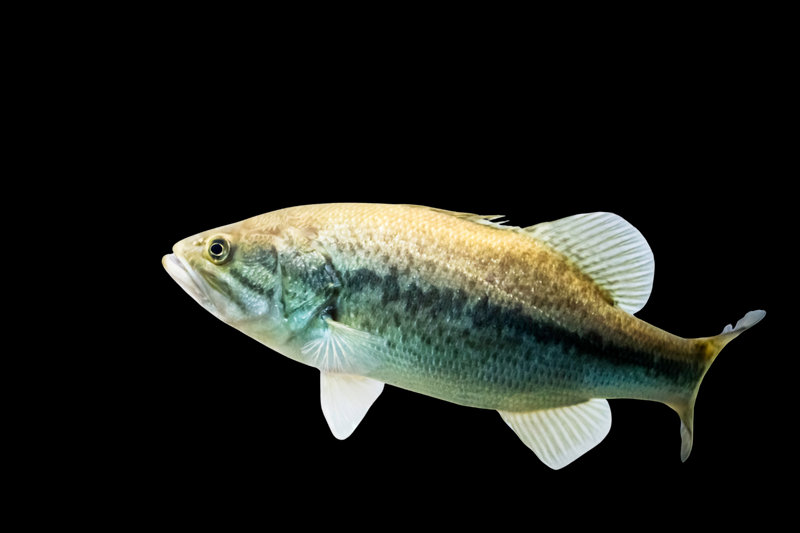
Largemouth Bass (Micropterus salmoides)
Micropterus
IUCN STATUS
Least Concern

CONSERVATION STATUS
Least Concern
CLASS
Actinopterygii
GEOGRAPHICAL RANGE
Native to eastern North America; widely introduced throughout the US, Canada, and on every continent except Antarctica
DIET
Carnivore
HABITAT
Warm, clear to slightly turbid freshwater lakes, ponds, rivers, and reservoirs with aquatic vegetation; prefers water temperatures 18–24°C
🔬 Classification
PHYLUM
Chordata
CLASS
Actinopterygii
ORDER
Perciformes
FAMILY
Centrarchidae
GENUS
Micropterus
📋 Description
SIZE
30–60 cm (typical); up to 10 kg record; females grow larger than males
COLORATION
Olive green to dark green back fading to white belly; distinctive horizontal dark lateral band along the midline; lower jaw extends past the rear of the eye
ADAPTATIONS
Ambush predator using aquatic vegetation, logs, and structure for cover; can detect prey vibrations through the lateral line; uses explosive burst speed for strikes
🌿 Ecology
HABITAT
Warm, clear to slightly turbid freshwater lakes, ponds, rivers, and reservoirs with aquatic vegetation; prefers water temperatures 18–24°C
DIET
Carnivore
GEOGRAPHIC RANGE
Native to eastern North America; widely introduced throughout the US, Canada, and on every continent except Antarctica
REPRODUCTION
Males build and guard a nest on the bottom in spring; females lay 2,000–145,000 eggs; male guards fry aggressively for several weeks
DIET DETAILS
Opportunistic predator consuming fish, frogs, crayfish, mice, ducklings, and virtually any animal small enough to swallow
⚠️ Threats & Conservation
PRIMARY THREATS
Habitat degradation from eutrophication; water drawdowns exposing nests; invasive species; introduced where non-native
💡 Interesting Facts
1
The Largemouth Bass is the most popular sport fish in North America — over 30 million Americans fish for bass and the bass fishing industry generates over $15 billion annually.
2
The world record Largemouth Bass of 10.09 kg was caught in Georgia in 1932 and held for over 80 years; the pursuit of a new world record drives a massive competitive bass fishing industry.
🔭 Sighting Guide
📍 BEST PLACES TO SIGHT
Guntersville Lake near Guntersville, AL, is consistently ranked among the top Largemouth Bass fishing destinations in the US
Lake Fork near Alba, TX, holds the Texas state Largemouth Bass record and is a premier trophy bass fishery
Kissimmee Chain of Lakes near Kissimmee, FL, has outstanding Largemouth Bass fishing in natural lake habitat
🗓️ BEST TIME TO SIGHT
March to June for most active feeding near shoreline structure; Guntersville Lake in AL and Lake Fork in TX are famed trophy bass destinations.
🎯 SIGHTING TIPS
Spring and summer. Most active and accessible in spring during the pre-spawn period; found in virtually every warm-water lake and reservoir in the US.
🏨 Where to Stay
🐾 You Might Also Want to See...

Species
Range
Status
Species
Range
Status
Species
Range
Status
Species
Range
Status