Home › Arachnida › Theridiidae › Gooty Sapphire Ornamental Spider (Poecilotheria metallica)
SPECIES PROFILE
Gooty Sapphire Ornamental Spider (Poecilotheria metallica)
Poecilotheria
IUCN STATUS
Endangered

CONSERVATION STATUS
Endangered
CLASS
Arachnida
GEOGRAPHICAL RANGE
Southeast India: Andhra Pradesh, Tamil Nadu
DIET
Carnivorous
HABITAT
Dry deciduous forests
🔬 Classification
PHYLUM
Arthropoda
CLASS
Arachnida
ORDER
Araneae
FAMILY
Theridiidae
GENUS
Poecilotheria
📋 Description
SIZE
Leg span 15-18 cm, 15-30 grams
COLORATION
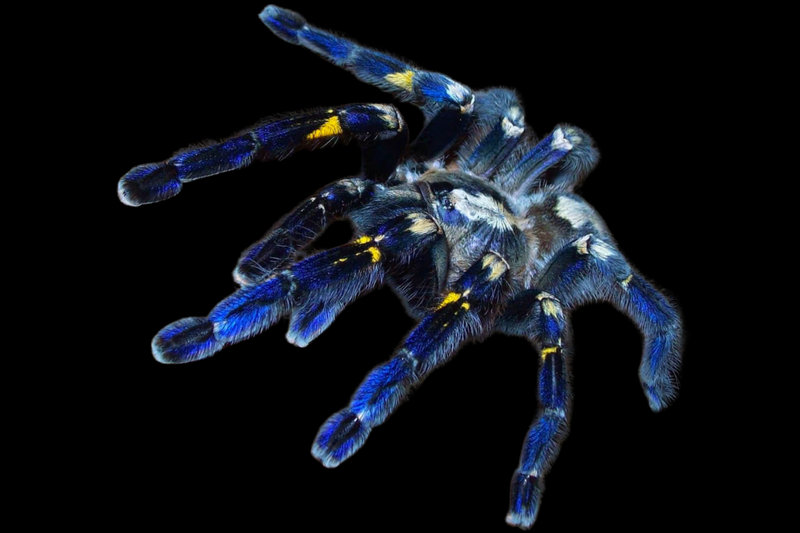
Striking metallic blue with yellow markings
ADAPTATIONS
Fast, arboreal, venomous bite
🌿 Ecology
HABITAT
Dry deciduous forests
DIET
Carnivorous
GEOGRAPHIC RANGE
Southeast India: Andhra Pradesh, Tamil Nadu
REPRODUCTION
Lays 40-80 eggs in silk sac, hatch 5-7 weeks
DIET DETAILS
Insects, small vertebrates
⚠️ Threats & Conservation
PRIMARY THREATS
Habitat loss, pet trade
💡 Interesting Facts
1
Vivid Hues: Their metallic blue legs dazzle in Nallamala's forests with 15 cm spans critically endangered at 1000 individuals. Deforestation threatens their 200 sq km range.
2
Tree Hunters: These tarantulas ambush insects from tree hollows striking at 2 meters per second in Horsley Hills. Captive breeding aids their survival in India's dry forests.
🔭 Sighting Guide
📍 BEST PLACES TO SIGHT
Nallamala Hills in Andhra Pradesh dry forest is a gooty spider habitat
Horsley Hills in Andhra Pradesh rocky terrains offer gooty spider sightings
Talupula Reserve Forest in Andhra Pradesh scrublands hosts gooty spider sightings
🗓️ BEST TIME TO SIGHT
June-September. Monsoon increases spider activity in forests.
🎯 SIGHTING TIPS
Search tree bark at night with guides to spot vibrant blue spiders.