Home › Insecta › Nymphalidae › Monarch Butterfly (Danaus plexippus)
SPECIES PROFILE
Monarch Butterfly (Danaus plexippus)
Danaus
IUCN STATUS
Endangered

CONSERVATION STATUS
Endangered
CLASS
Insecta
GEOGRAPHICAL RANGE
Breeds throughout North America; eastern population overwinters in Michoacán, Mexico; western population in coastal California
DIET
Herbivore (larval stage); Nectarivore (adult)
HABITAT
Overwinters in oyamel fir forests at 3,000 m elevation in Michoacán; breeds in milkweed-rich areas throughout North America in summer
🔬 Classification
PHYLUM
Chordata
CLASS
Insecta
ORDER
Lepidoptera
FAMILY
Nymphalidae
GENUS
Danaus
📋 Description
SIZE
Wingspan 8.9–10.2 cm
COLORATION
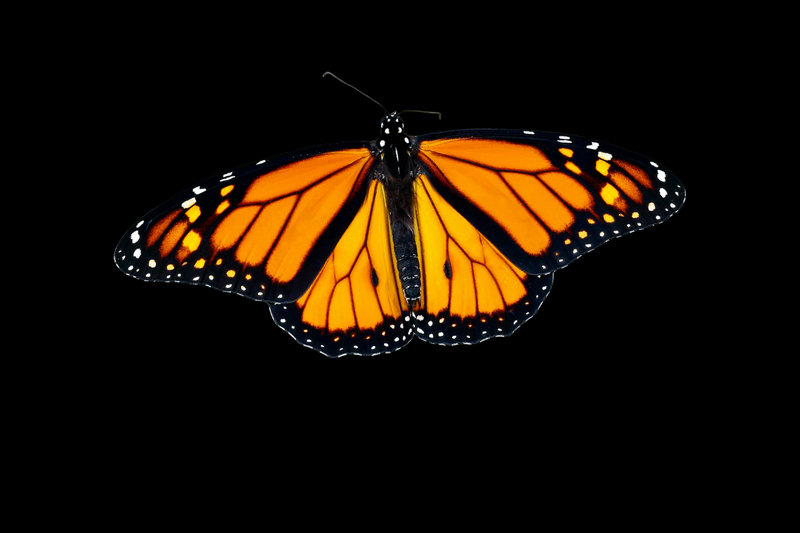
Brilliant orange wings with black veins and borders; white spots along the black wing margins; males have a black scent patch on the hindwing
ADAPTATIONS
Toxic from milkweed cardenolides consumed as larvae; orange-black aposematic colouration warns predators; navigates using a sun compass in its antennae
🌿 Ecology
HABITAT
Overwinters in oyamel fir forests at 3,000 m elevation in Michoacán; breeds in milkweed-rich areas throughout North America in summer
DIET
Herbivore (larval stage); Nectarivore (adult)
GEOGRAPHIC RANGE
Breeds throughout North America; eastern population overwinters in Michoacán, Mexico; western population in coastal California
REPRODUCTION
Overwintering generation lives 6–8 months; spring generation migrates north and breeds; 4 generations complete the annual cycle
DIET DETAILS
Larvae eat exclusively milkweed; adults drink nectar; overwintering adults rely on stored fat reserves
⚠️ Threats & Conservation
PRIMARY THREATS
Deforestation of overwintering forest in Michoacán; milkweed loss in North American breeding areas; climate change disrupting migration timing; pesticides
💡 Interesting Facts
1
The Monarch Butterfly's overwintering colonies in Michoacán cover individual trees with up to 10,000 butterflies per branch — the combined weight occasionally breaks large limbs.
2
No individual Monarch butterfly completes the full migration cycle; the butterfly reaching Mexico in autumn is 3–4 generations removed from the one that left Canada the previous spring, yet navigates to the same grove.
🔭 Sighting Guide
📍 BEST PLACES TO SIGHT
El Rosario Monarch Butterfly Sanctuary near Angangueo, Michoacán, is the largest and most accessible overwintering colony
Sierra Chincua Sanctuary near Angangueo, Michoacán, is a quieter alternative sanctuary with dense overwintering clusters
Cerro Pelón Sanctuary near Zitácuaro, Michoacán, is the most southerly major Monarch overwintering site
🗓️ BEST TIME TO SIGHT
November to March at the Monarch Butterfly Biosphere Reserve sanctuaries near Angangueo and Ocampo, Michoacán; morning warm-up flights are the peak experience.
🎯 SIGHTING TIPS
Winter. The overwintering colonies in Michoacán are the most spectacular wildlife event in Mexico; 100 million butterflies fill oyamel fir forests November to March.