Home › Mammalia › Phocoenidae › Vaquita (Phocoena sinus)
SPECIES PROFILE
Vaquita (Phocoena sinus)
Phocoena
IUCN STATUS
Critically Endangered


CONSERVATION STATUS
Critically Endangered
CLASS
Mammalia
GEOGRAPHICAL RANGE
Endemic to the northern Gulf of California, Mexico — the most restricted range of any marine mammal
DIET
Carnivore
HABITAT
Shallow, murky, warm waters of the northern Gulf of California where warm and cold currents mix to produce rich upwellings
🔬 Classification
PHYLUM
Chordata
CLASS
Mammalia
ORDER
Cetacea
FAMILY
Phocoenidae
GENUS
Phocoena
📋 Description
SIZE
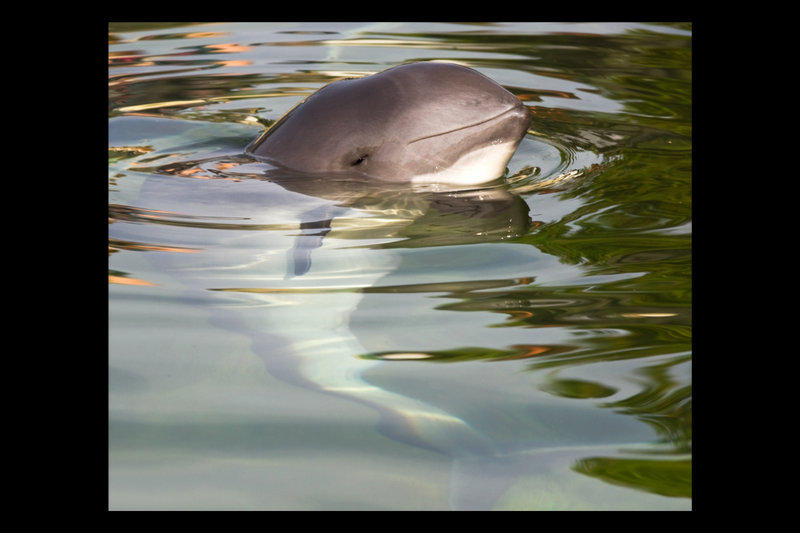
1.2–1.5 m; 30–55 kg — the world's smallest cetacean
COLORATION
Light grey above with white belly; distinctive dark eye patches and lip patches; small triangular dorsal fin
ADAPTATIONS
Smallest cetacean on Earth; restricted to a tiny range of less than 2,000 km²; produces high-frequency clicks for echolocation
🌿 Ecology
HABITAT
Shallow, murky, warm waters of the northern Gulf of California where warm and cold currents mix to produce rich upwellings
DIET
Carnivore
GEOGRAPHIC RANGE
Endemic to the northern Gulf of California, Mexico — the most restricted range of any marine mammal
REPRODUCTION
Single calf born every 2 years; slow reproductive rate makes population recovery almost impossible at current mortality levels
DIET DETAILS
Small fish, squid, and crustaceans caught in the turbid shallow waters of the upper Gulf
⚠️ Threats & Conservation
PRIMARY THREATS
Entanglement in illegal gillnets set for totoaba fish (whose swim bladders are smuggled to China); insufficient enforcement of the gillnet ban
💡 Interesting Facts
1
The Vaquita is the world's most endangered marine mammal — fewer than 10 individuals are believed to survive as of 2024, making extinction in the wild virtually certain without emergency intervention.
2
The Vaquita was not scientifically described until 1958; by the 1990s gillnet bycatch had already reduced the population to the hundreds; the species has been in freefall ever since.
🔭 Sighting Guide
📍 BEST PLACES TO SIGHT
Upper Gulf of California Biosphere Reserve near San Felipe, BCN, is the only location on Earth where wild Vaquitas survive
El Golfo de Santa Clara, Sonora, is near the core Vaquita habitat in the restricted zone
San Felipe, BCN, is the nearest town to Vaquita habitat and the base for conservation monitoring operations
🗓️ BEST TIME TO SIGHT
The upper Gulf of California near San Felipe, BCN, is the only location on Earth where Vaquitas survive; sightings are extremely rare and usually require research expeditions.
🎯 SIGHTING TIPS
Year-round but critically rare. The last remaining Vaquitas inhabit the upper Gulf of California near San Felipe; sightings require research vessel access.