Home › Mammalia › Phocoenidae › Harbour Porpoise (Phocoena phocoena)
SPECIES PROFILE
Harbour Porpoise (Phocoena phocoena)
Phocoena
IUCN STATUS
Least Concern

CONSERVATION STATUS
Least Concern
CLASS
Mammalia
GEOGRAPHICAL RANGE
Temperate and subarctic coasts of the North Atlantic and North Pacific; common in the Gulf of St. Lawrence and Bay of Fundy
DIET
Carnivore
HABITAT
Coastal and shelf waters; bays, estuaries, harbours, and tidal channels; less pelagic than dolphins
🔬 Classification
PHYLUM
Chordata
CLASS
Mammalia
ORDER
Cetacea
FAMILY
Phocoenidae
GENUS
Phocoena
📋 Description
SIZE
1.4–1.9 m; 45–65 kg — one of the smallest cetaceans
COLORATION
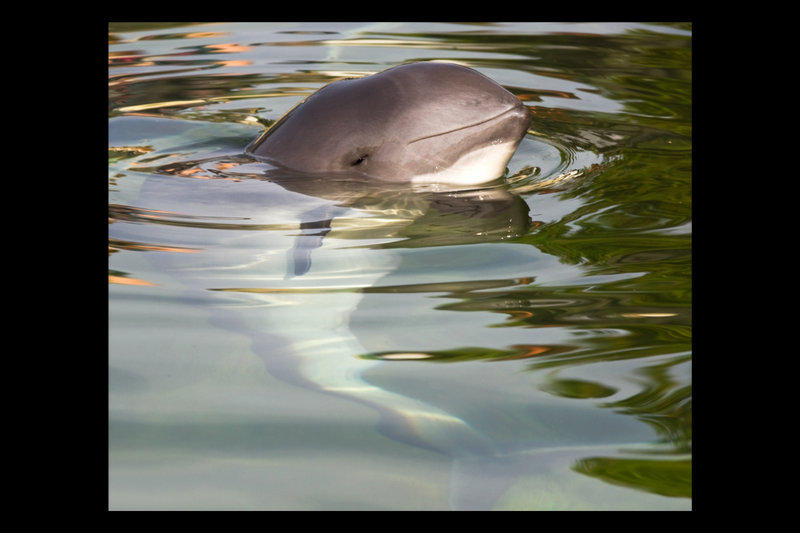
Dark grey-brown back; pale grey sides; white belly; small triangular dorsal fin; rounded head with no beak
ADAPTATIONS
Unusually high metabolic rate for its body size; must eat frequently; echolocation clicks in a very high narrow frequency band
🌿 Ecology
HABITAT
Coastal and shelf waters; bays, estuaries, harbours, and tidal channels; less pelagic than dolphins
DIET
Carnivore
GEOGRAPHIC RANGE
Temperate and subarctic coasts of the North Atlantic and North Pacific; common in the Gulf of St. Lawrence and Bay of Fundy
REPRODUCTION
Single calf born in summer after 10-month gestation; calf weaned within 10 months; females can give birth every year
DIET DETAILS
Small schooling fish including herring, capelin, and sprat, plus squid and small bottom fish; needs to consume about 10% of its body weight daily
⚠️ Threats & Conservation
PRIMARY THREATS
Entanglement in gillnets and other fishing gear; underwater noise pollution; pollution
💡 Interesting Facts
1
The Harbour Porpoise is the most commonly seen small cetacean in Atlantic Canadian waters; despite its small size it must eat around 10% of its body weight daily to sustain its metabolism.
2
Unlike dolphins, Harbour Porpoises are rarely playful around boats; they tend to be shy, surfacing quickly in a characteristic rolling motion easily distinguished from dolphins.
🔭 Sighting Guide
📍 BEST PLACES TO SIGHT
Brier Island near Westport, NS, is one of the best land-based whale and porpoise watching sites in eastern Canada
Bay of Fundy between New Brunswick and Nova Scotia has abundant Harbour Porpoises year-round
Northumberland Strait between PEI and Nova Scotia has Harbour Porpoises visible from ferry crossings
🗓️ BEST TIME TO SIGHT
Visible from the Digby-Saint John ferry and headlands at Brier Island, NS, year-round; dawn and dusk on calm days offer the best views.
🎯 SIGHTING TIPS
Year-round. Commonly seen from ferry crossings in the Bay of Fundy and from headlands in Nova Scotia.