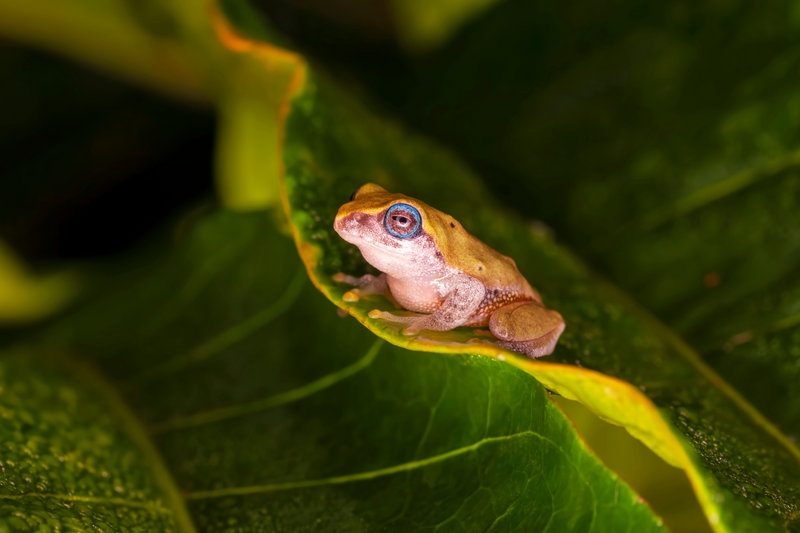
Home › Amphibia › Rhacophoridae › Malabar Gliding Frog (Rhacophorus malabaricus)
SPECIES PROFILE
Malabar Gliding Frog (Rhacophorus malabaricus)
Rhacophorus
IUCN STATUS
Least Concern


CONSERVATION STATUS
Least Concern
CLASS
Amphibia
GEOGRAPHICAL RANGE
Western Ghats: Kerala, Tamil Nadu, Karnataka
DIET
Carnivorous
HABITAT
Evergreen forests, near water
🔬 Classification
PHYLUM
Chordata
CLASS
Amphibia
ORDER
Anura
FAMILY
Rhacophoridae
GENUS
Rhacophorus
📋 Description
SIZE
7-10 cm long, 50-100 grams
COLORATION
Bright green with red webbing between toes
ADAPTATIONS
Webbed feet for gliding, sticky toe pads
🌿 Ecology
HABITAT
Evergreen forests, near water
DIET
Carnivorous
GEOGRAPHIC RANGE
Western Ghats: Kerala, Tamil Nadu, Karnataka
REPRODUCTION
Lays eggs in foam nests above water, tadpoles drop in
DIET DETAILS
Insects, spiders
⚠️ Threats & Conservation
PRIMARY THREATS
Habitat loss, pollution
💡 Interesting Facts
1
Aerial Acrobats: Gliding 10 meters between Silent Valley's trees their 10 cm webbed feet catch air with 5000 in Western Ghats. Monsoons trigger their 100-egg clutches.
2
Rainforest Jewels: Their green skin glows in Agumbe's rains with croaks at 70 decibels. Habitat loss threatens their 2000 sq km rainforest range.
🔭 Sighting Guide
📍 BEST PLACES TO SIGHT
Silent Valley National Park in Kerala rainforest canopy hosts gliding frog sightings
Agumbe Rainforest in Karnataka wet forests offer gliding frog sightings
Thattekad Bird Sanctuary in Kerala forested streams have gliding frog sightings
🗓️ BEST TIME TO SIGHT
Join night walks to spot frogs gliding between trees near streams.
🎯 SIGHTING TIPS
June-September. Monsoon triggers breeding with frogs active on trees.