
Home › Mammalia › Elephantidae › African Elephant (Loxodonta africana)
SPECIES PROFILE
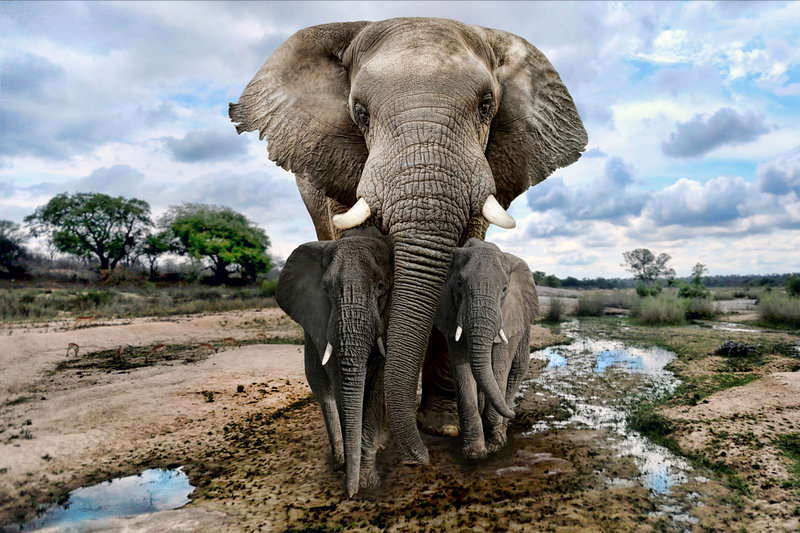
African Elephant (Loxodonta africana)
Loxodonta
IUCN STATUS
Vulnerable (Bush); Endangered (Forest)

CONSERVATION STATUS
Vulnerable (Bush); Endangered (Forest)
CLASS
Mammalia
GEOGRAPHICAL RANGE
Sub-Saharan Africa, widespread but fragmented
DIET
Herbivorous
HABITAT
Savannas, forests, woodlands; near water
🔬 Classification
PHYLUM
Chordata
CLASS
Mammalia
ORDER
Proboscidea
FAMILY
Elephantidae
GENUS
Loxodonta
📋 Description
SIZE
Males 3-4 m at shoulder, 2,000-14,000 kg; females 2.2-3.5 m, 1,800-6,000 kg
COLORATION
Grey skin, often reddish-brown from soil; large ears, tusks
ADAPTATIONS
Trunk for feeding/communication; tusks for digging/defense
🌿 Ecology
HABITAT
Savannas, forests, woodlands; near water
DIET
Herbivorous
GEOGRAPHIC RANGE
Sub-Saharan Africa, widespread but fragmented
REPRODUCTION
Gestation 22 months, 1 calf; calf with mother 5-10 years
DIET DETAILS
Grasses, leaves, bark, roots (up to 300 kg/day)
⚠️ Threats & Conservation
PRIMARY THREATS
Poaching (ivory), habitat loss, human conflict
💡 Interesting Facts
1
Memory and Navigation: Elephants possess an extraordinary memory, allowing them to recall water sources and migration routes across vast distances, even years apart. This cognitive ability is vital for survival in arid regions, where matriarchs lead herds to remembered oases during droughts.
2
Emotional Bonds: They exhibit profound emotional intelligence, mourning deceased herd members by touching bones with their trunks and even covering bodies with branches. This behavior suggests a level of empathy and social complexity rare among animals.
🔭 Sighting Guide
📍 BEST PLACES TO SIGHT
Amboseli National Park, Kenya
Chobe National Park, Botswana
Hwange National Park, Zimbabwe
🗓️ BEST TIME TO SIGHT
May-October: Dry season brings elephants to waterholes for drinking and bathing.
🎯 SIGHTING TIPS
Visit pumped waterholes at dusk to see large elephant herds drinking.
🐾 You Might Also Want to See...



Other "Vulnerable" Species

Species
Species
Species
Species