Home › Mammalia › Felidae › Jaguar (Panthera onca)
SPECIES PROFILE
Jaguar (Panthera onca)
Panthera
IUCN STATUS
Near Threatened

CONSERVATION STATUS
Near Threatened
CLASS
Mammalia
GEOGRAPHICAL RANGE
Southwestern US (rare) through Mexico and Central America to Argentina; strongholds in the Amazon and Pantanal
DIET
Carnivore
HABITAT
Dense tropical forest, gallery forest along rivers, wetlands, and flooded savannas; requires large territories of 25–150 km²
🔬 Classification
PHYLUM
Chordata
CLASS
Mammalia
ORDER
Carnivora
FAMILY
Felidae
GENUS
Panthera
📋 Description
SIZE
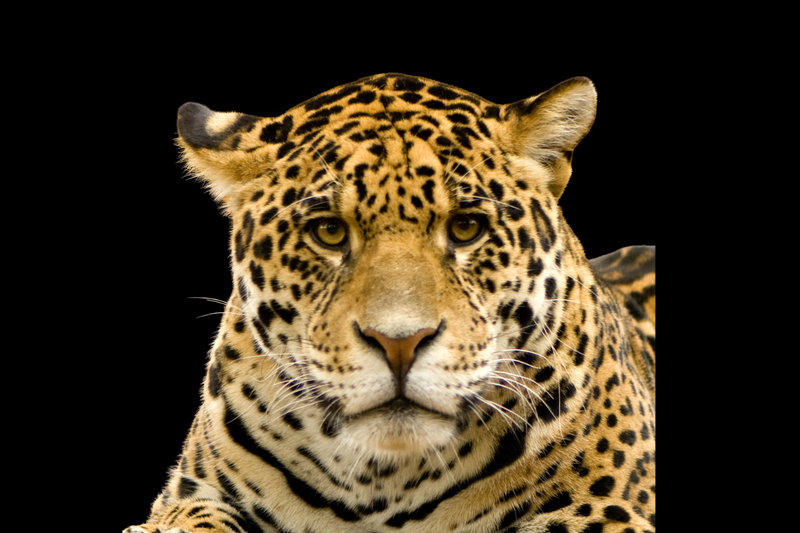
1.1–1.9 m body; 56–96 kg; females smaller; the largest cat in the Americas
COLORATION
Tawny-yellow to orange with distinctive rosette spots (dark rings enclosing smaller spots inside); black colour morph (melanistic) occurs; massive blocky head; short stocky legs
ADAPTATIONS
Strongest bite force relative to body size of any big cat — can bite through turtle shells and caiman skulls; swims powerfully; ambush predator stalking to within metres
🌿 Ecology
HABITAT
Dense tropical forest, gallery forest along rivers, wetlands, and flooded savannas; requires large territories of 25–150 km²
DIET
Carnivore
GEOGRAPHIC RANGE
Southwestern US (rare) through Mexico and Central America to Argentina; strongholds in the Amazon and Pantanal
REPRODUCTION
1–4 cubs born after 93–105 day gestation; cubs stay with mother for 2 years; males do not participate in cub-raising
DIET DETAILS
White-tailed deer, peccaries, caimans, capybara, tapirs, iguanas, turtles, and fish; highly diverse prey base
⚠️ Threats & Conservation
PRIMARY THREATS
Habitat loss and fragmentation; livestock depredation leading to retaliatory killing; prey depletion; trophy hunting
💡 Interesting Facts
1
The Jaguar was the supreme deity of the Aztec and Maya civilisations — the Jaguar Knight (Océlotl) was the highest rank in the Aztec military; jaguars appear in virtually every pre-Columbian art tradition in Mexico.
2
The Jaguar is the only big cat in the Americas and one of only two cats (with the Tiger) that regularly enters water to hunt; it catches fish and caimans in Yucatan rivers with its powerful paw swipes.
🔭 Sighting Guide
📍 BEST PLACES TO SIGHT
Calakmul Biosphere Reserve near Xpujil, Campeche, is Mexico's most important jaguar habitat and has the highest density
Sian Ka'an Biosphere Reserve near Tulum, Quintana Roo, has jaguars in tropical forest and coastal wetlands
Montes Azules Biosphere Reserve in the Lacandon rainforest, Chiapas, has jaguars in primary lowland forest
🗓️ BEST TIME TO SIGHT
Year-round but rare and elusive. Calakmul Biosphere Reserve is Mexico's jaguar stronghold; camera traps reveal presence; night boat tours in Celestún sometimes detect them.
🎯 SIGHTING TIPS
Year-round; Calakmul Biosphere Reserve near Xpujil, Campeche, has the highest jaguar density in Mexico; Sian Ka'an in Quintana Roo also has confirmed individuals.