Home › Aves › Ardeidae › Black Bittern (Ixobrychus flavicollis)
SPECIES PROFILE
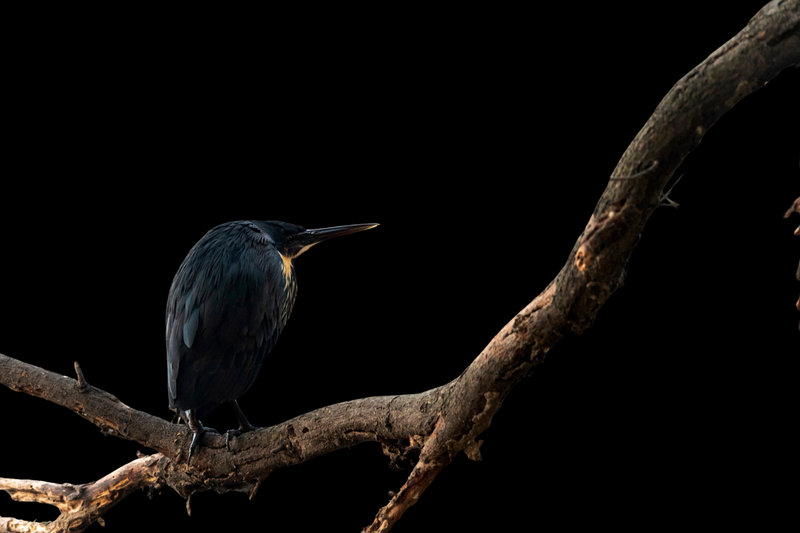
Black Bittern (Ixobrychus flavicollis)
Ixobrychus
IUCN STATUS
Least Concern

CONSERVATION STATUS
Least Concern
CLASS
Aves
GEOGRAPHICAL RANGE
Indian subcontinent southeast Asia
DIET
Carnivorous
HABITAT
Marshy wetlands reedbeds rice fields
🔬 Classification
PHYLUM
Chordata
CLASS
Aves
ORDER
Ciconiiformes
FAMILY
Ardeidae
GENUS
Ixobrychus
📋 Description
SIZE
50-65 cm long 200-400 g
COLORATION
Black upperparts yellow neck streaked underparts
ADAPTATIONS
Compact body for reedbed stalking long neck for striking
🌿 Ecology
HABITAT
Marshy wetlands reedbeds rice fields
DIET
Carnivorous
GEOGRAPHIC RANGE
Indian subcontinent southeast Asia
REPRODUCTION
Lays 3-5 eggs in reed nests incubated 17-20 days
DIET DETAILS
Fish insects crustaceans small reptiles
⚠️ Threats & Conservation
PRIMARY THREATS
Wetland drainage agricultural expansion
💡 Interesting Facts
1
Shadow Stalkers: Black Bitterns hide with 300-gram bodies stalking 80 grams of fish daily in Chilika's reedbeds. Their black plumage blends at dusk.
2
Nocturnal Hunters: These bitterns cover 3000 sq km in Bharatpur's wetlands nesting low in reeds. Habitat loss threatens their cryptic lifestyle.
🔭 Sighting Guide
📍 BEST PLACES TO SIGHT
Chilika Lake in Odisha brackish wetlands host black bittern sightings
Bharatpur Bird Sanctuary in Rajasthan marshes offer black bittern sightings
Sundarbans National Park in West Bengal mangroves have black bittern sightings
🗓️ BEST TIME TO SIGHT
October-March Dry season enhances visibility in reeds for spotting bitterns
🎯 SIGHTING TIPS
Search dense reedbeds at dusk for black bitterns standing motionless