Home › Mammalia › Bovidae › Nilgai (Boselaphus tragocamelus)
SPECIES PROFILE
Nilgai (Boselaphus tragocamelus)
Boselaphus
IUCN STATUS
Least Concern

CONSERVATION STATUS
Least Concern
CLASS
Mammalia
GEOGRAPHICAL RANGE
Northern plains, from Punjab to Bihar, south to Karnataka
DIET
Herbivorous
HABITAT
Scrub forests, grasslands, agricultural edges
🔬 Classification
PHYLUM
Chordata
CLASS
Mammalia
ORDER
Artiodactyla
FAMILY
Bovidae
GENUS
Boselaphus
📋 Description
SIZE
1.7-2.1 meters long, 1.2-1.5 meters at shoulder, 120-240 kg; males larger
COLORATION
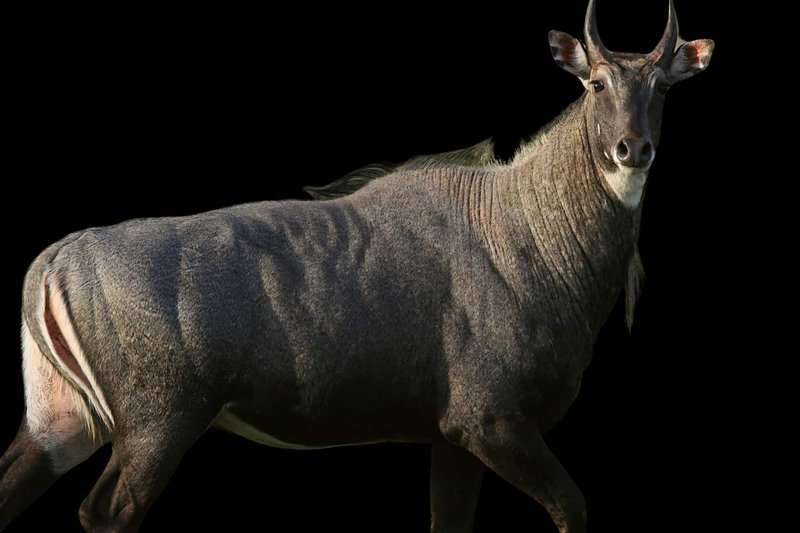
Males bluish-grey, females tawny, both with white throat patch; males have short horns
ADAPTATIONS
Long legs for running, robust build for browsing
🌿 Ecology
HABITAT
Scrub forests, grasslands, agricultural edges
DIET
Herbivorous
GEOGRAPHIC RANGE
Northern plains, from Punjab to Bihar, south to Karnataka
REPRODUCTION
Females gestate 8-9 months, birthing 1-2 calves; breeds year-round
DIET DETAILS
Grasses, leaves, crops like wheat and sorghum
⚠️ Threats & Conservation
PRIMARY THREATS
Crop damage conflicts, minor habitat loss
💡 Interesting Facts
1
Blue Antelope: Named ‘blue cow' their 2-meter bodies leap 2-meter fences in Sultanpur's grasslands with 100000 across India. Males' blue-gray coats signal dominance.
2
Agile Grazers: Eating 5 kg of grass daily in Ranthambore's scrublands their 200 kg herds of 10 roam 100 km. Agricultural expansion threatens their 50000 sq km range.
🔭 Sighting Guide
📍 BEST PLACES TO SIGHT
Sultanpur National Park in Haryana near Delhi hosts nilgai herd sightings
Ranthambore National Park in Rajasthan dry forests offer nilgai sightings
Gir Forest National Park in Gujarat has nilgai alongside lion sightings
🗓️ BEST TIME TO SIGHT
November-March. Dry season enhances visibility in open woodlands for nilgai.
🎯 SIGHTING TIPS
Visit grasslands at dawn to see nilgai grazing in herds.