Home › Actinopterygii › Oxudercidae › Mudskipper (Periophthalmus spp.)
SPECIES PROFILE
Mudskipper (Periophthalmus spp.)
Periophthalmus
IUCN STATUS
Least Concern

CONSERVATION STATUS
Least Concern
CLASS
Actinopterygii
GEOGRAPHICAL RANGE
Indonesian coasts
DIET
Carnivorous
HABITAT
Mangroves, mudflats
🔬 Classification
PHYLUM
Chordata
CLASS
Actinopterygii
ORDER
Gobiiformes
FAMILY
Oxudercidae
GENUS
Periophthalmus
📋 Description
SIZE
10-15 cm, 0.05-0.1 kg
COLORATION
Brown to grey; mottled
ADAPTATIONS
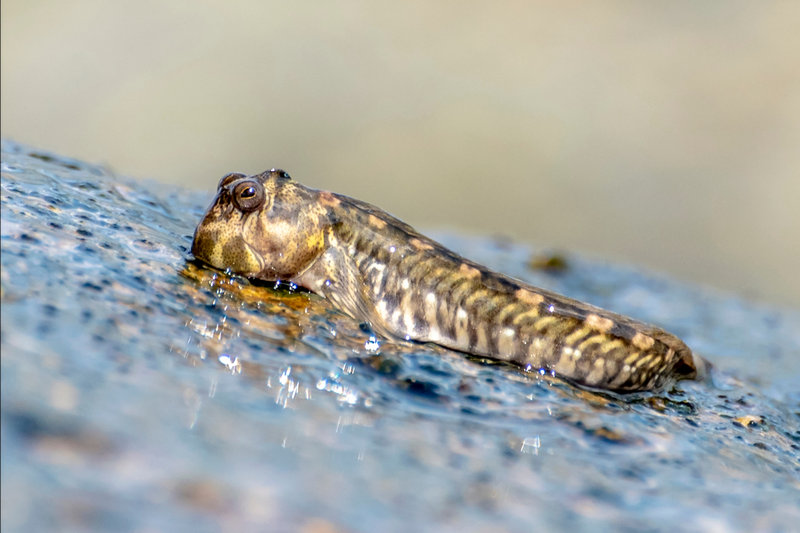
Pectoral fins for walking; air-breathing
🌿 Ecology
HABITAT
Mangroves, mudflats
DIET
Carnivorous
GEOGRAPHIC RANGE
Indonesian coasts
REPRODUCTION
Eggs in burrows; males guard
DIET DETAILS
Insects, crustaceans
⚠️ Threats & Conservation
PRIMARY THREATS
Mangrove loss
💡 Interesting Facts
1
Land-Walking Fish: Mudskippers use pectoral fins to "walk" on mud, breathing air through skin for hours, a fish evolving toward terrestrial life. Their hopping and climbing in Sumatra's mangroves blur aquatic and land boundaries, fascinating biologists.
2
Burrow Architects: Males dig air-pocketed burrows in mud, guarding eggs and flashing fins to attract females, protecting offspring from tides. These structures, seen in Berbera Mangrove, stabilize sediments, supporting Indonesia's vast mangrove ecosystems.
🔭 Sighting Guide
📍 BEST PLACES TO SIGHT
Berbera Mangrove Forest
Rufiji Delta, Tanzania
Siberut Island
🗓️ BEST TIME TO SIGHT
April-October. Dry season allows easier access to tidal mudflats where mudskippers are active.
🎯 SIGHTING TIPS
Visit mangroves at low tide to observe mudskippers hopping on mudflats.
🐾 You Might Also Want to See...

Species
Range
Status
Species
Range
Status
Species
Range
Status
Species
Range
Status