Home › Aves › Ramphastidae › Keel-billed Toucan (Ramphastos sulfuratus)
SPECIES PROFILE
Keel-billed Toucan (Ramphastos sulfuratus)
Ramphastos
IUCN STATUS
Least Concern

CONSERVATION STATUS
Least Concern
CLASS
Aves
GEOGRAPHICAL RANGE
Southern Mexico from Veracruz and Oaxaca south through Central America to Venezuela; common in humid Gulf lowlands
DIET
Omnivore
HABITAT
Tropical lowland and foothill forest; forest edges and clearings with large fruiting trees; semi-open areas adjacent to primary forest
🔬 Classification
PHYLUM
Chordata
CLASS
Aves
ORDER
Piciformes
FAMILY
Ramphastidae
GENUS
Ramphastos
📋 Description
SIZE
42–55 cm; 380–500 g
COLORATION
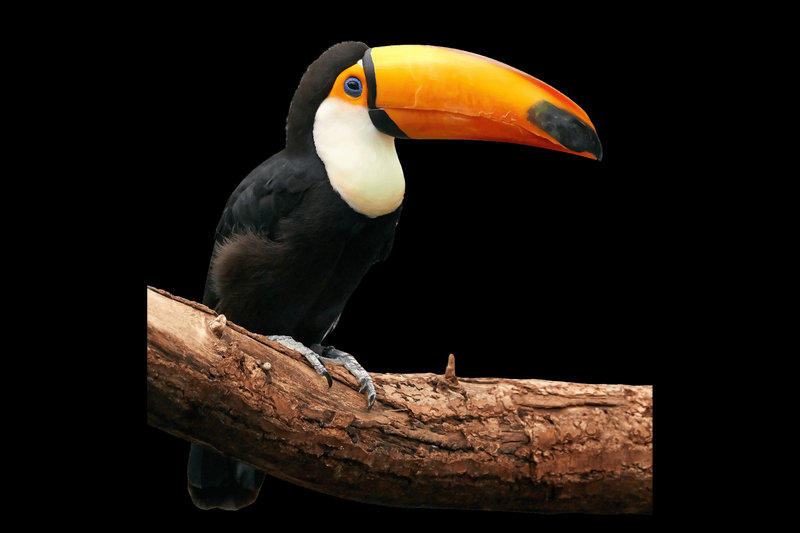
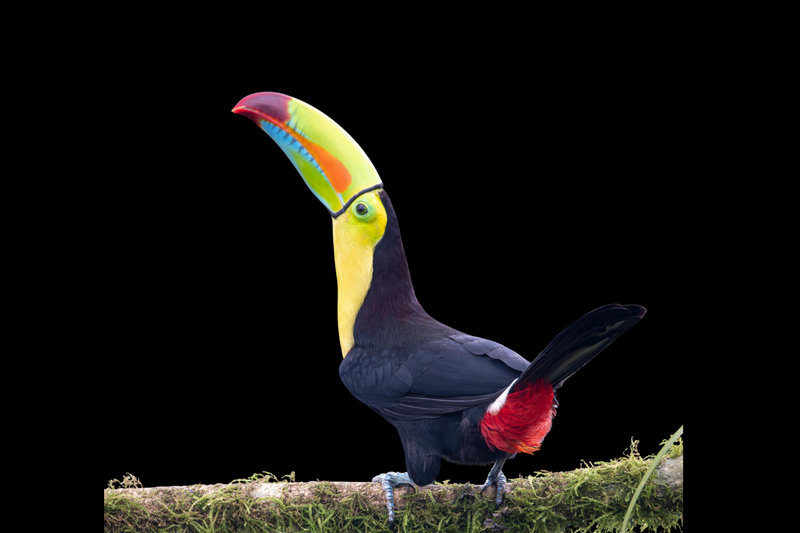
Black body with a vivid yellow-green face and chest; enormous multi-coloured bill (green, orange, red, and blue); red-tipped tail; blue feet
ADAPTATIONS
Large hollow bill is lightweight (mostly air and keratin struts) and used for reaching fruit on thin branches; thermoregulates by adjusting blood flow to the bill
🌿 Ecology
HABITAT
Tropical lowland and foothill forest; forest edges and clearings with large fruiting trees; semi-open areas adjacent to primary forest
DIET
Omnivore
GEOGRAPHIC RANGE
Southern Mexico from Veracruz and Oaxaca south through Central America to Venezuela; common in humid Gulf lowlands
REPRODUCTION
Nests in tree cavities (old woodpecker holes); 2–4 eggs; both parents incubate for 15–16 days; both parents regurgitate food for chicks
DIET DETAILS
Fruit is the primary food; also insects, lizards, frogs, eggs, and nestlings of other birds
⚠️ Threats & Conservation
PRIMARY THREATS
Habitat loss from deforestation; capture for the pet trade; hunting for meat in some areas
💡 Interesting Facts
1
The Keel-billed Toucan's enormous bill, which makes up one-third of its body length, is used as a thermoregulation device — blood flow to the bill can be increased to radiate heat on hot days.
2
Toucans sleep with their bill resting on their back and their tail folded up over the body — fitting into cavities much smaller than their bill length would suggest.
🔭 Sighting Guide
📍 BEST PLACES TO SIGHT
Los Tuxtlas Biosphere Reserve near San Andrés Tuxtla, Veracruz, has Keel-billed Toucans in humid Gulf lowland forest
Palenque ruins and surrounding forest, Chiapas, have Keel-billed Toucans calling from forest canopy year-round
Xpujil area near Calakmul, Campeche, has Keel-billed Toucans in tropical forest along the Campeche highway
🗓️ BEST TIME TO SIGHT
Year-round in Los Tuxtlas Biosphere Reserve, Veracruz, and around the ruins of Palenque, Chiapas; active at forest edges in the morning.
🎯 SIGHTING TIPS
Year-round. A signature bird of Mexico's Gulf lowland forest; Los Tuxtlas and Palenque are reliable sites; the huge bill makes it unmistakable.