Home › Reptilia › Chelydridae › Snapping Turtle (Chelydra serpentina)
SPECIES PROFILE
Snapping Turtle (Chelydra serpentina)
Chelydra
IUCN STATUS
Special Concern

CONSERVATION STATUS
Special Concern
CLASS
Reptilia
GEOGRAPHICAL RANGE
Eastern North America from Nova Scotia to the Rocky Mountains; core Canadian range in Ontario and Quebec
DIET
Omnivore
HABITAT
Shallow muddy-bottomed lakes, rivers, and wetlands with abundant aquatic vegetation
🔬 Classification
PHYLUM
Chordata
CLASS
Reptilia
ORDER
Testudines
FAMILY
Chelydridae
GENUS
Chelydra
📋 Description
SIZE
25–47 cm carapace; 4.5–16 kg; the largest freshwater turtle in Canada
COLORATION
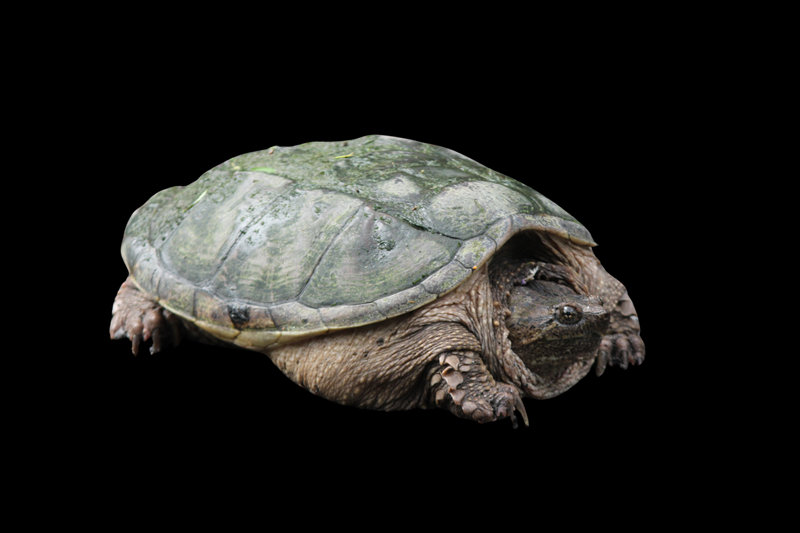
Dark brown to tan rough carapace; large head with a hooked beak; long tail with a sawtooth crest; algae often grows on the shell
ADAPTATIONS
Omnivorous ambush predator; algae-covered shell provides camouflage; able to survive for months under ice in winter
🌿 Ecology
HABITAT
Shallow muddy-bottomed lakes, rivers, and wetlands with abundant aquatic vegetation
DIET
Omnivore
GEOGRAPHIC RANGE
Eastern North America from Nova Scotia to the Rocky Mountains; core Canadian range in Ontario and Quebec
REPRODUCTION
Females travel up to 2 km to find a nest site; lay 25–80 eggs in June; 55–125 day incubation; hatchlings overwinter in the nest
DIET DETAILS
Fish, frogs, birds, small mammals, aquatic invertebrates, and aquatic plants — a highly generalist diet
⚠️ Threats & Conservation
PRIMARY THREATS
Road mortality of nesting females; bycatch in fish traps; harvest for the turtle soup trade; wetland drainage
💡 Interesting Facts
1
Snapping Turtles are among Canada's longest-lived reptiles, potentially surviving 70+ years; they do not reach reproductive maturity until 15–20 years, making adult mortality very damaging.
2
Despite their aggressive reputation on land, Snapping Turtles are not aggressive in water; their defensive bite is a response to being approached or handled out of water.
🔭 Sighting Guide
📍 BEST PLACES TO SIGHT
Point Pelee National Park, ON, has Snapping Turtles in its marshes and is a key conservation site
Rideau River corridor near Ottawa, ON, has a healthy Snapping Turtle population in slow-moving water
Lac Saint-Pierre near Trois-Rivières, QC, is an important Snapping Turtle habitat in the St. Lawrence floodplain
🗓️ BEST TIME TO SIGHT
Mid-June when females travel overland to nest; early morning at the edges of marshes and slow rivers in southern Ontario and Quebec.
🎯 SIGHTING TIPS
June. Watch for females crossing roads to nest in southern Ontario; early morning at marshes and slow rivers from May to October.
🏨 Where to Stay
🐾 You Might Also Want to See...

Species
Range
Status
Species
Range
Status
Species
Range
Status
Species
Range
Status