Home › Aves › Momotidae › Turquoise-browed Motmot (Eumomota superciliosa)
SPECIES PROFILE
Turquoise-browed Motmot (Eumomota superciliosa)
Eumomota
IUCN STATUS
Least Concern

CONSERVATION STATUS
Least Concern
CLASS
Aves
GEOGRAPHICAL RANGE
Mexico through Central America; the most widespread motmot in Honduras and El Salvador; national bird of both countries
DIET
Omnivore
HABITAT
Tropical dry forest, forest edges, agricultural areas with scattered trees, and scrubby lowland woodland; highly adaptable
🔬 Classification
PHYLUM
Chordata
CLASS
Aves
ORDER
Coraciiformes
FAMILY
Momotidae
GENUS
Eumomota
📋 Description
SIZE
34 cm including elongated tail rackets; 65 g
COLORATION
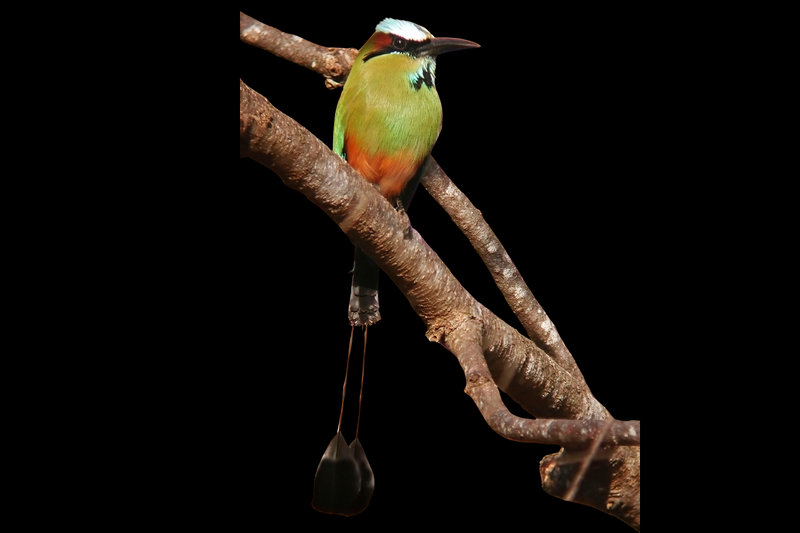
Rufous-orange crown and back; turquoise-blue face stripe and wing coverts; black central crown and mask; two elongated tail feathers with bare shafts ending in blue-green rackets
ADAPTATIONS
Swings its racket tail like a pendulum to signal vigilance to potential predators — thought to advertise to predators that they have been detected; excavates a burrow nest in a bank
🌿 Ecology
HABITAT
Tropical dry forest, forest edges, agricultural areas with scattered trees, and scrubby lowland woodland; highly adaptable
DIET
Omnivore
GEOGRAPHIC RANGE
Mexico through Central America; the most widespread motmot in Honduras and El Salvador; national bird of both countries
REPRODUCTION
Excavates a 1–2 m burrow in an earthen bank; 3–6 eggs; both parents incubate; both feed the chicks
DIET DETAILS
Insects, lizards, frogs, and small snakes caught by sallying from a perch; also fruit and berries
⚠️ Threats & Conservation
PRIMARY THREATS
Habitat loss from deforestation and agricultural expansion; generally resilient and adapts well to disturbed habitats
💡 Interesting Facts
1
The Turquoise-browed Motmot is the national bird of both Honduras and El Salvador — the only species to hold that distinction in two countries simultaneously.
2
The motmot's pendulum tail-wagging behaviour is thought to be an "honest signal" to predators — research shows snakes are significantly less likely to attack motmots that are actively wagging their tails.
🔭 Sighting Guide
📍 BEST PLACES TO SIGHT
Copán Ruinas area, Honduras, has Turquoise-browed Motmots perching openly near the ruins and surrounding dry forest
Comayagua Valley near Comayagua city has Turquoise-browed Motmots in dry forest and agricultural land with scattered trees
Lago de Yojoa near Santa Cruz de Yojoa, Honduras, has motmots in forest edges along the lakeshore
🗓️ BEST TIME TO SIGHT
Year-round throughout the Comayagua Valley and Pacific Honduras; Copán area and Río Amarillo valley have abundant pairs perching openly.
🎯 SIGHTING TIPS
Year-round. Common throughout the Pacific lowlands and dry forest of Honduras; the national bird of both Honduras and El Salvador; impossible to miss near ruins.
🏨 Where to Stay
🐾 You Might Also Want to See...

Species
Range
Status
Species
Range
Status
Species
Range
Status
Species
Range
Status