Home › Mammalia › Cebidae › White-faced Capuchin (Cebus capucinus)
SPECIES PROFILE
White-faced Capuchin (Cebus capucinus)
Cebus
IUCN STATUS
Least Concern

CONSERVATION STATUS
Least Concern
CLASS
Mammalia
GEOGRAPHICAL RANGE
Honduras south through Central America to Ecuador; common in Caribbean lowland forests of Honduras
DIET
Omnivore
HABITAT
Tropical lowland and foothill forest; forest edges; secondary growth; highly adaptable and often found near human settlements
🔬 Classification
PHYLUM
Chordata
CLASS
Mammalia
ORDER
Primates
FAMILY
Cebidae
GENUS
Cebus
📋 Description
SIZE
33–45 cm body; 3–4 kg
COLORATION
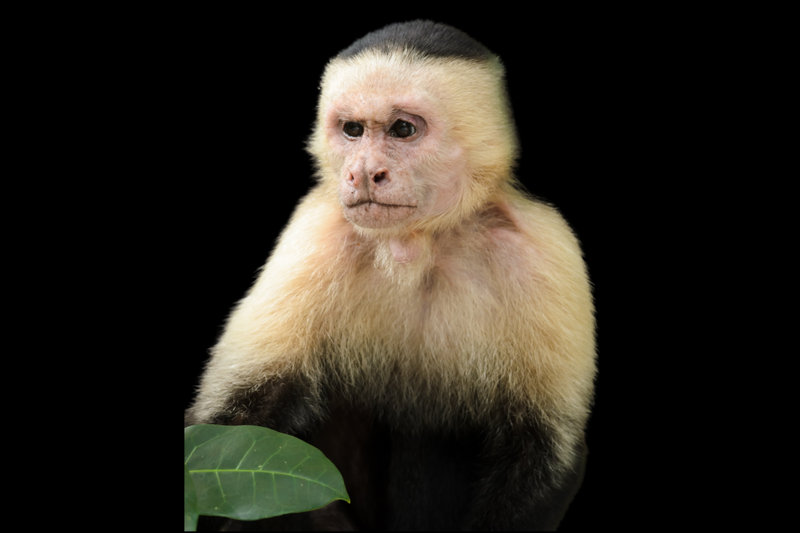
Black body with a white face, throat, and chest; black cap; pink face; long non-prehensile tail; expressive facial features
ADAPTATIONS
Highly intelligent problem-solver; uses tools including stones and sticks; complex social hierarchy; washes hands and feet with urine as an insect repellent
🌿 Ecology
HABITAT
Tropical lowland and foothill forest; forest edges; secondary growth; highly adaptable and often found near human settlements
DIET
Omnivore
GEOGRAPHIC RANGE
Honduras south through Central America to Ecuador; common in Caribbean lowland forests of Honduras
REPRODUCTION
Single infant after 160–170 day gestation; infant clings to mother's back for several months; complex social learning of food-processing techniques
DIET DETAILS
Fruit, seeds, insects, small vertebrates (frogs, lizards), bird eggs, and nestlings; highly varied opportunistic diet
⚠️ Threats & Conservation
PRIMARY THREATS
Habitat loss; hunting; capture as pets; crop raiding leading to persecution
💡 Interesting Facts
1
White-faced Capuchins are among the most cognitively sophisticated New World monkeys — they have been observed using stone tools to crack open nuts, a behaviour previously associated only with great apes.
2
Capuchins inspect, prepare, and share food with troop members in ways that suggest cultural transmission — young capuchins learn specific food-processing techniques by watching older individuals.
🔭 Sighting Guide
📍 BEST PLACES TO SIGHT
Pico Bonito National Park near La Ceiba, Honduras, has habituated White-faced Capuchin troops in lowland forest
Lancetilla Botanical Garden near Tela, Honduras, has White-faced Capuchin troops that regularly descend to garden pathways
Cuero y Salado Wildlife Refuge near La Ceiba has White-faced Capuchins in mangrove-edge forest accessible by boat
🗓️ BEST TIME TO SIGHT
Year-round in Pico Bonito National Park near La Ceiba and the Lancetilla Botanical Garden; troops forage at forest edges in morning hours.
🎯 SIGHTING TIPS
Year-round. Active and bold during the day in lowland forest; Pico Bonito and Lancetilla are reliable sites; troops are easily habituated to observers.