Home › Mammalia › Eschrichtiidae › Gray Whale (Eschrichtius robustus)
SPECIES PROFILE
Gray Whale (Eschrichtius robustus)
Eschrichtius
IUCN STATUS
Least Concern

CONSERVATION STATUS
Least Concern
CLASS
Mammalia
GEOGRAPHICAL RANGE
Eastern Pacific from Bering Sea to Baja California; western Pacific population nearly extinct
DIET
Filter feeder
HABITAT
Shallow coastal lagoons of Baja California for winter breeding; Arctic and sub-Arctic Bering Sea for summer feeding
🔬 Classification
PHYLUM
Chordata
CLASS
Mammalia
ORDER
Cetacea
FAMILY
Eschrichtiidae
GENUS
Eschrichtius
📋 Description
SIZE
12–15 m; 15,000–35,000 kg
COLORATION
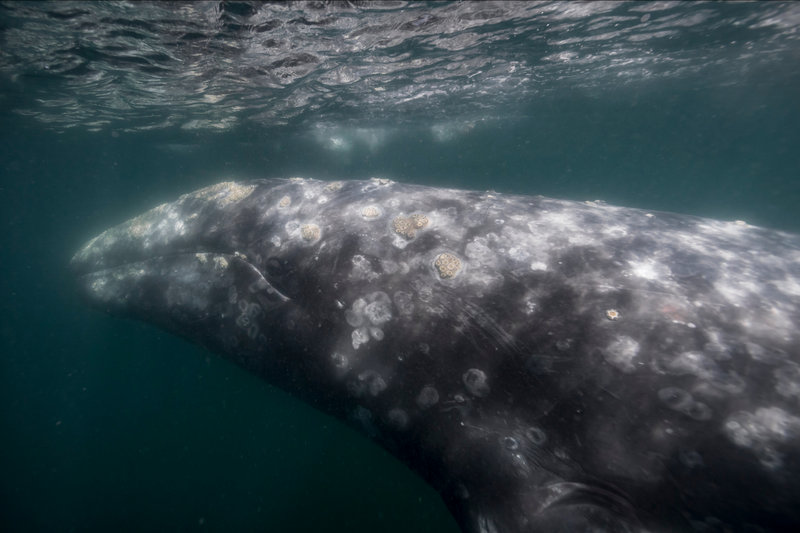
Grey with white mottling from barnacle clusters; no dorsal fin; two blowholes; knuckled ridge along the back
ADAPTATIONS
Feeds by rolling sideways and sucking sediment to filter amphipods; migrates 16,000–20,000 km annually between Arctic and Baja — the longest mammal migration on Earth
🌿 Ecology
HABITAT
Shallow coastal lagoons of Baja California for winter breeding; Arctic and sub-Arctic Bering Sea for summer feeding
DIET
Filter feeder
GEOGRAPHIC RANGE
Eastern Pacific from Bering Sea to Baja California; western Pacific population nearly extinct
REPRODUCTION
Single calf born in warm Baja lagoons January to March; calf nursed for 7 months; mother is highly protective in calving lagoons
DIET DETAILS
Amphipods, tube worms, and small crustaceans sucked from seafloor sediment through baleen plates
⚠️ Threats & Conservation
PRIMARY THREATS
Historical commercial whaling reduced to near extinction twice; now fully recovered in the eastern Pacific; vessel strikes and entanglement remain concerns
💡 Interesting Facts
1
Gray Whales are the only baleen whale that feeds primarily by suction on the seafloor; their feeding pits can carpet hundreds of square kilometres of the Bering Sea bottom.
2
Baja California lagoon Gray Whales regularly approach small boats and allow themselves to be touched — behaviour so unusual it earned the lagoons UNESCO World Heritage status.
🔭 Sighting Guide
📍 BEST PLACES TO SIGHT
Laguna San Ignacio near San Ignacio, Baja California Sur, is the most pristine Gray Whale calving lagoon in the world
Ojo de Liebre (Scammon's Lagoon) near Guerrero Negro, BCS, is the largest Gray Whale calving lagoon
Bahía Magdalena near Puerto San Carlos, BCS, is the southernmost major Gray Whale wintering ground
🗓️ BEST TIME TO SIGHT
January to April at Laguna San Ignacio and Ojo de Liebre; small pangas approach whales that frequently lift their heads to inspect boats.
🎯 SIGHTING TIPS
Winter to spring. Gray Whales breed and calf in Baja lagoons January to April; Laguna San Ignacio and Ojo de Liebre are the world's best sites.
🏨 Where to Stay
🐾 You Might Also Want to See...

Species
Range
Status
Species
Range
Status
Species
Range
Status
Species
Range
Status