Home › Aves › Motacillidae › Paddyfield Pipit (Anthus rufulus)
SPECIES PROFILE
Paddyfield Pipit (Anthus rufulus)
Anthus
IUCN STATUS
Least Concern

CONSERVATION STATUS
Least Concern
CLASS
Aves
GEOGRAPHICAL RANGE
Indian subcontinent southeast Asia
DIET
Insectivorous
HABITAT
Grasslands fields marshes
🔬 Classification
PHYLUM
Chordata
CLASS
Aves
ORDER
Passeriformes
FAMILY
Motacillidae
GENUS
Anthus
📋 Description
SIZE
15-16 cm long 15-20 g
COLORATION
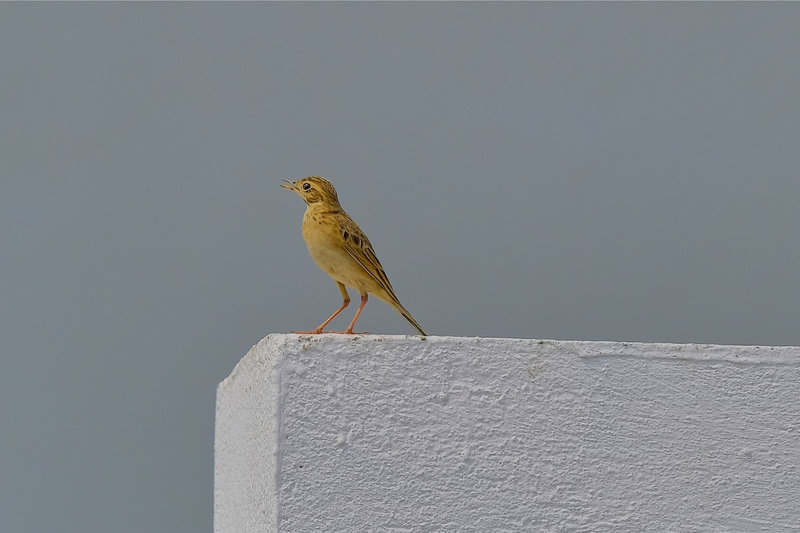
Brown with streaked upperparts pale underparts
ADAPTATIONS
Long legs for ground foraging inconspicuous plumage
🌿 Ecology
HABITAT
Grasslands fields marshes
DIET
Insectivorous
GEOGRAPHIC RANGE
Indian subcontinent southeast Asia
REPRODUCTION
Lays 3-4 eggs in ground nests incubated 12-14 days
DIET DETAILS
Insects small invertebrates
⚠️ Threats & Conservation
PRIMARY THREATS
Agricultural intensification habitat loss
💡 Interesting Facts
1
Ground Runners: Paddyfield Pipits hop with 18-gram bodies eating 5 grams of insects daily in Gujarat's fields. Their streaked plumage blends with grass.
2
Widespread Foragers: These pipits cover 3000 sq km in Maharashtra's grasslands nesting in tufts. Pesticides threaten their prey.
🔭 Sighting Guide
📍 BEST PLACES TO SIGHT
Bhigwan Bird Sanctuary in Maharashtra
Jamnagar in Gujarat
Sultanpur National Park in Haryana
🗓️ BEST TIME TO SIGHT
Year-round Open fields ensure visibility for spotting pipits
🎯 SIGHTING TIPS
Watch paddyfield pipits running on open ground or low perches