Home › Aves › Pycnonotidae › Red-vented Bulbul (Pycnonotus cafer)
SPECIES PROFILE
Red-vented Bulbul (Pycnonotus cafer)
Pycnonotus
IUCN STATUS
Least Concern

CONSERVATION STATUS
Least Concern
CLASS
Aves
GEOGRAPHICAL RANGE
Indian subcontinent Bangladesh Sri Lanka Burma Bhutan Nepal
DIET
Omnivorous
HABITAT
Dry scrub open forest plains cultivated lands
🔬 Classification
PHYLUM
Chordata
CLASS
Aves
ORDER
Passeriformes
FAMILY
Pycnonotidae
GENUS
Pycnonotus
📋 Description
SIZE
20 cm long 30-40 g
COLORATION
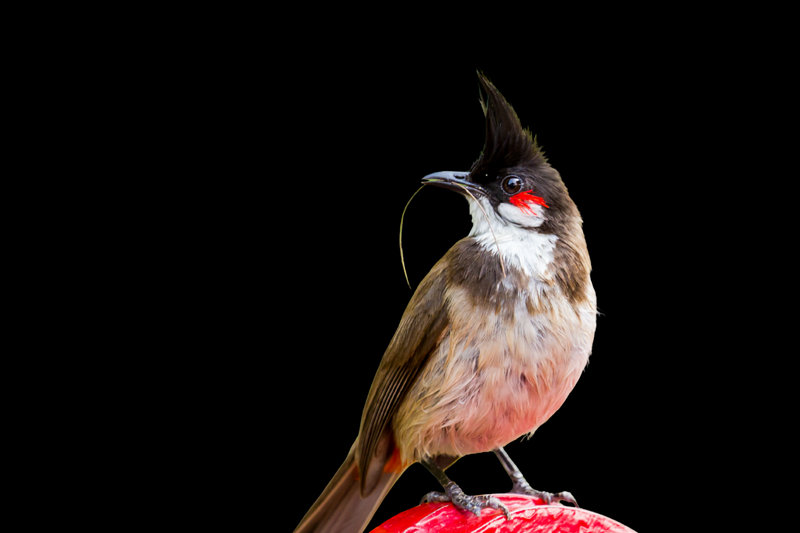
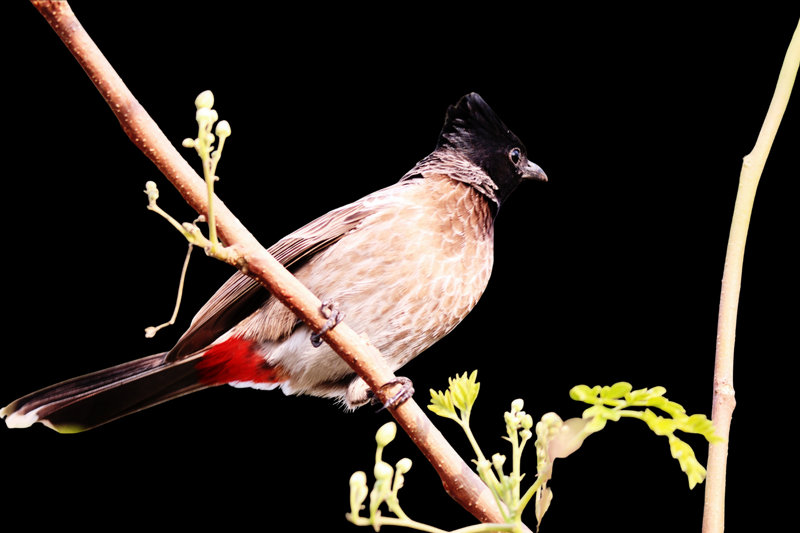
Dark brown scaly body black head short crest white rump red vent long black tail white-tipped
ADAPTATIONS
Builds nests in bushes houses tree cavities feeds on variety disperses seeds multiple clutches
🌿 Ecology
HABITAT
Dry scrub open forest plains cultivated lands
DIET
Omnivorous
GEOGRAPHIC RANGE
Indian subcontinent Bangladesh Sri Lanka Burma Bhutan Nepal
REPRODUCTION
Lays 2-3 pinkish eggs in cup nests incubated 14 days
DIET DETAILS
Fruits flower petals nectar insects house geckos
⚠️ Threats & Conservation
PRIMARY THREATS
Considered pest for crop damage disperses invasives
💡 Interesting Facts
1
Versatile Foragers: Red-vented Bulbuls sing with 35-gram bodies eating 15 grams of fruits daily in Gujarat's gardens. Their crests bob while feeding.
2
Invasive Spreaders: These bulbuls cover 5000 sq km in Delhi's plains nesting in bushes. Human activities boost their populations.
🔭 Sighting Guide
📍 BEST PLACES TO SIGHT
Jamnagar in Gujarat
Delhi national capital
Pondicherry in Puducherry
🗓️ BEST TIME TO SIGHT
Year-round Gardens ensure visibility for spotting bulbuls
🎯 SIGHTING TIPS
Look for red-vented bulbuls calling from treetops