Home › Aves › Pteroclidae › Chestnut-bellied Sandgrouse (Pterocles exustus)
SPECIES PROFILE
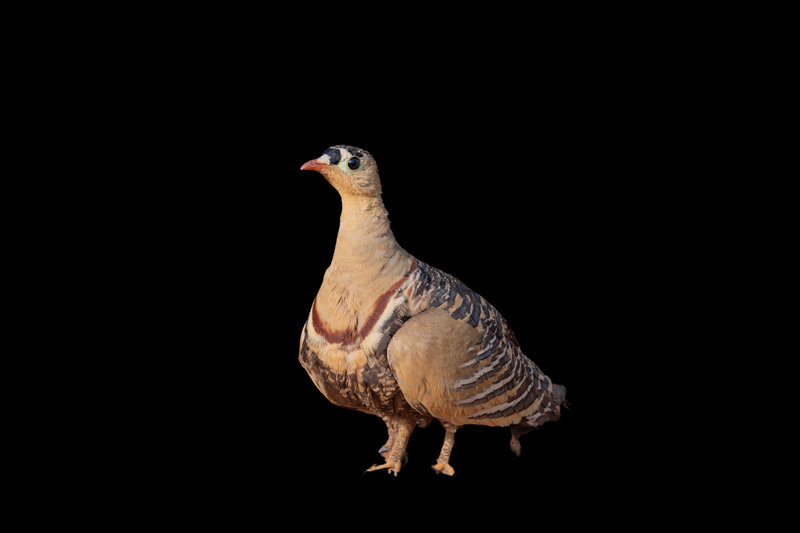
Chestnut-bellied Sandgrouse (Pterocles exustus)
Pterocles
IUCN STATUS
Least Concern

CONSERVATION STATUS
Least Concern
CLASS
Aves
GEOGRAPHICAL RANGE
Indian subcontinent Africa Middle East
DIET
Omnivorous
HABITAT
Dry scrub deserts grasslands
🔬 Classification
PHYLUM
Chordata
CLASS
Aves
ORDER
Galliformes
FAMILY
Pteroclidae
GENUS
Pterocles
📋 Description
SIZE
31-33 cm long 200-300 g
COLORATION
Brown with chestnut belly black markings
ADAPTATIONS
Strong wings for fast flight to waterholes
🌿 Ecology
HABITAT
Dry scrub deserts grasslands
DIET
Omnivorous
GEOGRAPHIC RANGE
Indian subcontinent Africa Middle East
REPRODUCTION
Lays 2-3 eggs in ground scrapes incubated 20-25 days
DIET DETAILS
Seeds green leaves
⚠️ Threats & Conservation
PRIMARY THREATS
Habitat loss hunting
💡 Interesting Facts
1
Chestnut Flyers: Chestnut-bellied Sandgrouse fly with 250-gram bodies eating 50 grams of seeds daily in Rajasthan's deserts. Their chestnut bellies are distinctive.
2
Waterhole Visitors: These sandgrouse cover 2000 sq km in Gujarat's scrub nesting on ground. Overgrazing threatens their habitat.
🔭 Sighting Guide
📍 BEST PLACES TO SIGHT
Jorbeer Conservation Reserve in Rajasthan
Jamnagar in Gujarat
Ranthambore National Park in Rajasthan
🗓️ BEST TIME TO SIGHT
Year-round Deserts ensure visibility for spotting sandgrouse
🎯 SIGHTING TIPS
Watch chestnut-bellied sandgrouse flying to waterholes at dawn
🐾 You Might Also Want to See...

Species
Range
Status
Species
Range
Status
Species
Range
Status
Species
Range
Status