Home › Aves › Gaviidae › Common Loon (Gavia immer)
SPECIES PROFILE
Common Loon (Gavia immer)
Gavia
IUCN STATUS
Least Concern

CONSERVATION STATUS
Least Concern
CLASS
Aves
GEOGRAPHICAL RANGE
Breeds across boreal and mixed-forest Canada into Alaska and northern US; winters on Atlantic and Pacific coasts
DIET
Carnivore
HABITAT
Clear, cold freshwater lakes with good fish visibility; requires undisturbed shoreline for nesting
🔬 Classification
PHYLUM
Chordata
CLASS
Aves
ORDER
Gaviiformes
FAMILY
Gaviidae
GENUS
Gavia
📋 Description
SIZE
70–90 cm; 3–5 kg
COLORATION
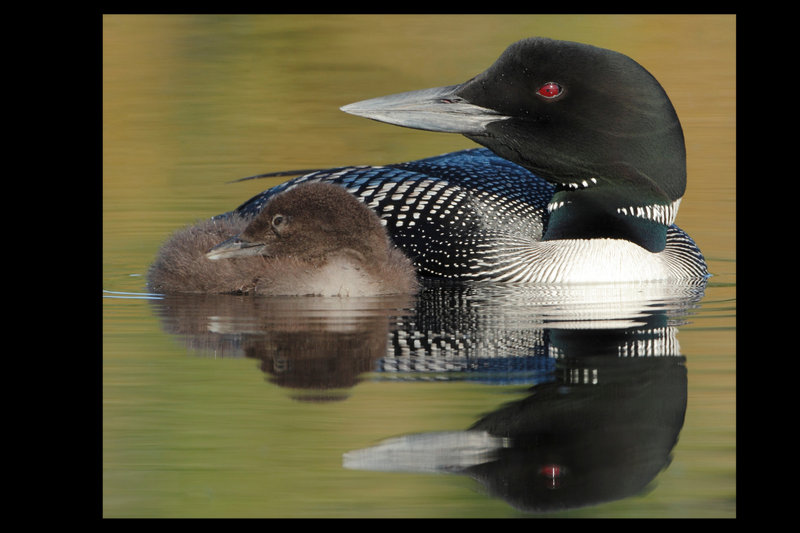
Summer: iridescent black head, black-and-white checkered back, red eye; winter: grey above and white below
ADAPTATIONS
Dense bones reduce buoyancy for deeper diving; legs set far back on body for powerful swimming; may dive to 60 m
🌿 Ecology
HABITAT
Clear, cold freshwater lakes with good fish visibility; requires undisturbed shoreline for nesting
DIET
Carnivore
GEOGRAPHIC RANGE
Breeds across boreal and mixed-forest Canada into Alaska and northern US; winters on Atlantic and Pacific coasts
REPRODUCTION
Monogamous pair returns to the same lake each year; 1–2 eggs in a low nest at the water's edge; chicks ride on parents' backs
DIET DETAILS
Fish including perch, trout, and bass caught by pursuit-diving; also crayfish, snails, and aquatic insects
⚠️ Threats & Conservation
PRIMARY THREATS
Mercury and lead poisoning from ingested fishing tackle; boat wake washing out nests; acid rain affecting fish populations
💡 Interesting Facts
1
The Common Loon appears on the Canadian dollar coin (the loonie) and its tremolo call is synonymous with the Canadian wilderness experience.
2
Loons need a long runway of open water to take flight and cannot walk on land; they must nest at the water's edge and return to the same territory year after year.
🔭 Sighting Guide
📍 BEST PLACES TO SIGHT
Algonquin Provincial Park, ON, has one of the highest breeding densities of Common Loons in Ontario
Killarney Provincial Park on Georgian Bay, ON, offers loon sightings on crystal-clear Shield lakes
La Mauricie National Park, QC, has abundant loons calling on its boreal lakes throughout summer
🗓️ BEST TIME TO SIGHT
June and July for nesting pairs with chicks; best seen at sunrise and dusk from a canoe; Algonquin, Killarney, and La Mauricie are reliable parks.
🎯 SIGHTING TIPS
Summer. Listen for haunting wailing calls on any shield lake in Ontario and Quebec from May to August.
🏨 Where to Stay
🐾 You Might Also Want to See...

Species
Range
Status
Species
Range
Status
Species
Range
Status
Species
Range
Status