Home › Mammalia › Phalangeridae › Common Brushtail Possum (Trichosurus vulpecula)
SPECIES PROFILE
Common Brushtail Possum (Trichosurus vulpecula)
Trichosurus
IUCN STATUS
Least Concern

CONSERVATION STATUS
Least Concern
CLASS
Mammalia
GEOGRAPHICAL RANGE
Native to Australia (widespread except arid regions). Introduced to New Zealand
DIET
Omnivorous
HABITAT
Forests, urban areas, and woodlands across Australia
🔬 Classification
PHYLUM
Chordata
CLASS
Mammalia
ORDER
Diprotodontia
FAMILY
Phalangeridae
GENUS
Trichosurus
📋 Description
SIZE
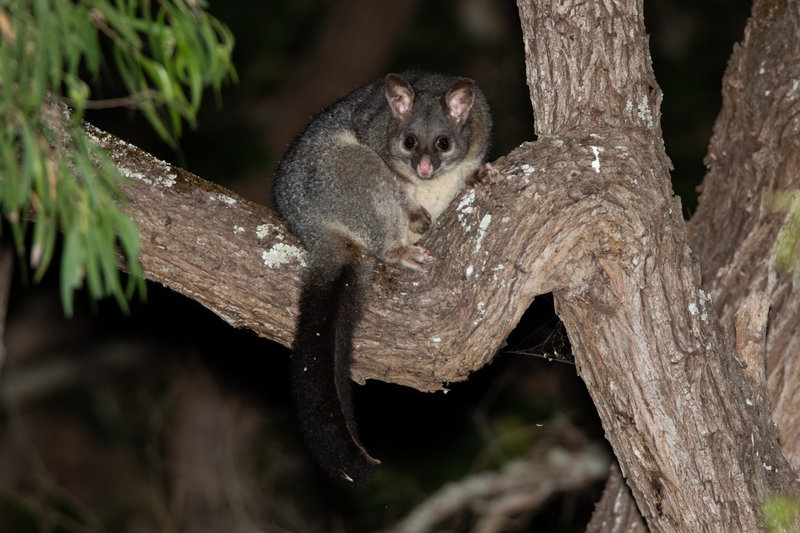
2–4 kg, with a bushy tail, pointed ears, and sharp claws
COLORATION
Silver-grey to dark brown; lighter underbelly
ADAPTATIONS
Prehensile tail for climbing; nocturnal
🌿 Ecology
HABITAT
Forests, urban areas, and woodlands across Australia
DIET
Omnivorous
GEOGRAPHIC RANGE
Native to Australia (widespread except arid regions). Introduced to New Zealand
REPRODUCTION
Females carry 1–2 joeys in a forward-facing pouch for 4–5 months. Young stay with the mother for up to 10 months
DIET DETAILS
Feeds on leaves, fruits, and small animals including insects, small vertebrates, and bird eggs. In urban areas, raids garbage bins and eats pet food
⚠️ Threats & Conservation
PRIMARY THREATS
Predation by foxes, cats, and dogs in urban areas
💡 Interesting Facts
1
Urban Scavengers: Common brushtail possums raid Royal Botanic Gardens’ bins, climbing 5 meters with prehensile tails to forage 200 grams of scraps. Their millions-strong population, including 20 million in New Zealand, disperses seeds, though urban pets kill 10% yearly.
2
Nocturnal Foragers: In Great Otway’s forests, they consume 100 grams of eucalyptus leaves nightly, their sharp claws gripping bark in Melbourne Zoo’s trees. Their adaptability, nesting in roofs, supports survival, with females birthing 20 joeys over a lifetime.
🔭 Sighting Guide
📍 BEST PLACES TO SIGHT
Royal Botanic Gardens in Sydney offer urban areas for possum sightings
Great Otway National Park in Victoria has forests for possum sightings
Melbourne Zoo in Victoria features urban sanctuary with wild possum populations
🗓️ BEST TIME TO SIGHT
September-March. Spring and summer make possums more active in urban and forest trees.
🎯 SIGHTING TIPS
Look for possums in eucalyptus trees at dusk with spotlights.