Home › Aves › Bucerotidae › Great Indian Hornbill (Buceros bicornis)
SPECIES PROFILE
Great Indian Hornbill (Buceros bicornis)
Buceros
IUCN STATUS
Near Threatened

CONSERVATION STATUS
Near Threatened
CLASS
Aves
GEOGRAPHICAL RANGE
Western Ghats, Northeast India
DIET
Omnivorous
HABITAT
Tropical and subtropical forests
🔬 Classification
PHYLUM
Chordata
CLASS
Aves
ORDER
Bucerotiformes
FAMILY
Bucerotidae
GENUS
Buceros
📋 Description
SIZE
1-1.2 meters long, wingspan 1.5 meters, 2.5-4 kg
COLORATION
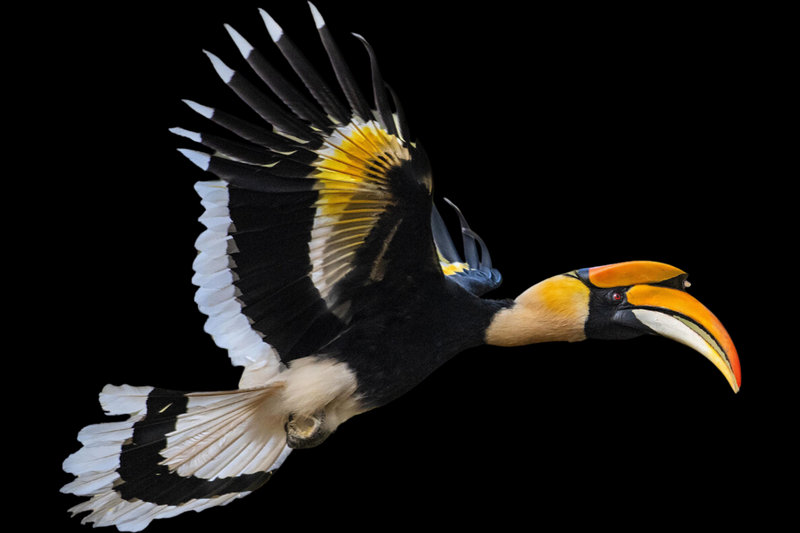
Black with white belly, yellow casque, white wing patches
ADAPTATIONS
Large beak with casque for resonance, strong wings
🌿 Ecology
HABITAT
Tropical and subtropical forests
DIET
Omnivorous
GEOGRAPHIC RANGE
Western Ghats, Northeast India
REPRODUCTION
Lays 1-2 eggs in tree cavities, incubated 38-40 days
DIET DETAILS
Fruits, small mammals, birds, reptiles
⚠️ Threats & Conservation
PRIMARY THREATS
Deforestation, hunting for casques
💡 Interesting Facts
1
Noisy Fliers: Their 1.5-meter wingbeats echo 500 meters in Namdapha's rainforests with 10000 across India. Their 3 kg bodies feed on 1 kg of figs daily.
2
Tribal Reverence: Northeast tribes honor their curved beaks in Kaziranga's folklore with 50-year lifespans. Deforestation threatens their 5000 sq km canopy range.
🔭 Sighting Guide
📍 BEST PLACES TO SIGHT
Namdapha National Park in Arunachal Pradesh rainforest is a hornbill habitat
Periyar National Park in Kerala Western Ghats forests host hornbill sightings
Kaziranga National Park in Assam eastern forests offer hornbill sightings
🗓️ BEST TIME TO SIGHT
November-March. Dry season improves visibility in forest canopies for hornbills.
🎯 SIGHTING TIPS
Look for hornbills feeding in fruiting trees at dawn with birding guides.