Home › Mammalia › Procyonidae › White-nosed Coati (Nasua narica)
SPECIES PROFILE
White-nosed Coati (Nasua narica)
Nasua
IUCN STATUS
Least Concern


CONSERVATION STATUS
Least Concern
CLASS
Mammalia
GEOGRAPHICAL RANGE
Southwestern US south through Central America to Ecuador; widespread in forested Mexico
DIET
Omnivore
HABITAT
Tropical and subtropical forest, scrubland, and mountain woodland from Arizona to South America; adaptable to secondary forest and forest edges
🔬 Classification
PHYLUM
Chordata
CLASS
Mammalia
ORDER
Carnivora
FAMILY
Procyonidae
GENUS
Nasua
📋 Description
SIZE
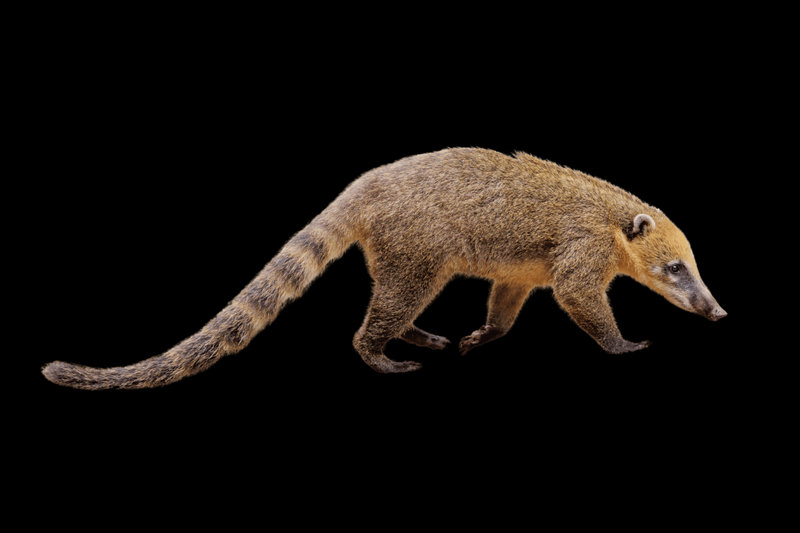
41–67 cm body; 3–7 kg; long banded tail carried erect
COLORATION
Reddish-brown to grey-brown with a distinctive long flexible white-tipped snout; banded tail; white facial markings around the eyes and snout
ADAPTATIONS
Long flexible snout used to probe soil and leaf litter for invertebrates; semi-retractile claws for climbing; highly social in matrilineal bands
🌿 Ecology
HABITAT
Tropical and subtropical forest, scrubland, and mountain woodland from Arizona to South America; adaptable to secondary forest and forest edges
DIET
Omnivore
GEOGRAPHIC RANGE
Southwestern US south through Central America to Ecuador; widespread in forested Mexico
REPRODUCTION
Mating season February to March; females leave the band to give birth alone in a tree nest; litter of 2–6 young; females and young form permanent social bands
DIET DETAILS
Invertebrates (beetles, grubs, scorpions), fruit, small vertebrates, and carrion; uses snout to dig and root in soil
⚠️ Threats & Conservation
PRIMARY THREATS
Hunting for meat; habitat loss; road mortality; persecution as agricultural pests
💡 Interesting Facts
1
White-nosed Coatis live in matrilineal bands of up to 30 females and young that move together through the forest; adult males are solitary and only join the band briefly to mate.
2
Coatis use their highly mobile snout, which can rotate 60 degrees in any direction, to probe under rocks, into crevices, and through leaf litter — functioning like a sensitive biological probe.
🔭 Sighting Guide
📍 BEST PLACES TO SIGHT
Barrancas del Cobre (Copper Canyon) near Creel, Chihuahua, has White-nosed Coatis in canyon woodland habitat
Álamos, Sonora, and surrounding tropical dry forest have easily observed White-nosed Coati bands
El Cielo Biosphere Reserve near Gómez Farías, Tamaulipas, has White-nosed Coatis in cloud forest
🗓️ BEST TIME TO SIGHT
Year-round in the Copper Canyon region of Chihuahua and in tropical dry forest near Álamos, Sonora; active in daylight hours in small groups.
🎯 SIGHTING TIPS
Year-round. Social groups (bands) of females and young are active during the day in forest edges and canyon woodlands; easily observed.