Home › Aves › Alcedinidae › Pied Kingfisher (Ceryle rudis)
SPECIES PROFILE
Pied Kingfisher (Ceryle rudis)
Ceryle
IUCN STATUS
Least Concern

CONSERVATION STATUS
Least Concern
CLASS
Aves
GEOGRAPHICAL RANGE
Indian subcontinent Africa
DIET
Carnivorous
HABITAT
Rivers lakes wetlands
🔬 Classification
PHYLUM
Chordata
CLASS
Aves
ORDER
Coraciiformes
FAMILY
Alcedinidae
GENUS
Ceryle
📋 Description
SIZE
25-30 cm long 70-100 g
COLORATION
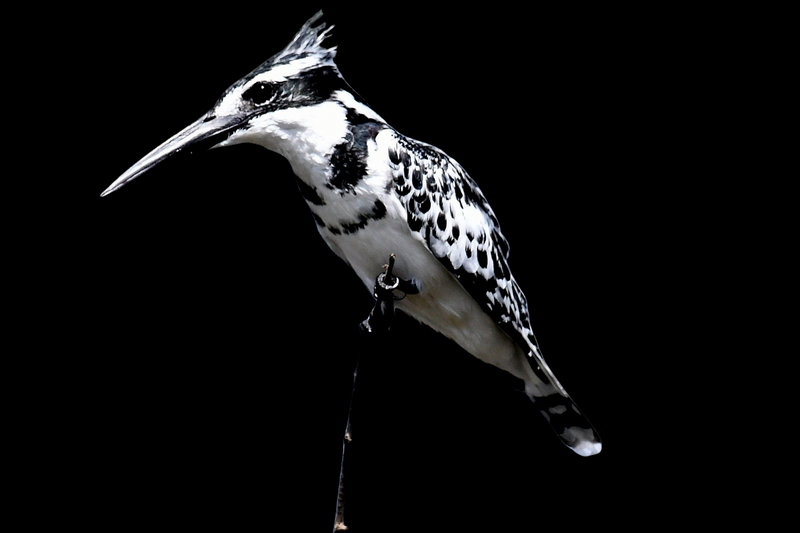
Black and white with crest long bill
ADAPTATIONS
Strong bill for fish catching hovers before diving
🌿 Ecology
HABITAT
Rivers lakes wetlands
DIET
Carnivorous
GEOGRAPHIC RANGE
Indian subcontinent Africa
REPRODUCTION
Lays 4-6 eggs in burrow nests incubated 18-21 days
DIET DETAILS
Fish crustaceans insects
⚠️ Threats & Conservation
PRIMARY THREATS
Water pollution habitat loss
💡 Interesting Facts
1
Pied Divers: Pied Kingfishers hover with 80-gram bodies catching 25 grams of fish daily in Chambal's rivers. Their pied plumage is striking.
2
Tunnel Nesters: These kingfishers cover 3000 sq km in Kerala's waters nesting in riverbanks. Pollution threatens their prey.
🔭 Sighting Guide
📍 BEST PLACES TO SIGHT
Chambal River in Uttar Pradesh
Thattekad Bird Sanctuary in Kerala
Sultanpur National Park in Haryana
🗓️ BEST TIME TO SIGHT
October-March Dry season enhances visibility near water for spotting kingfishers
🎯 SIGHTING TIPS
Watch pied kingfishers hovering over water before diving