Home › Aves › Dicruridae › Greater Racket-tailed Drongo (Dicrurus paradiseus)
SPECIES PROFILE
Greater Racket-tailed Drongo (Dicrurus paradiseus)
Dicrurus
IUCN STATUS
Least Concern

CONSERVATION STATUS
Least Concern
CLASS
Aves
GEOGRAPHICAL RANGE
Indian subcontinent southeast Asia
DIET
Insectivorous
HABITAT
Forests woodlands clearings
🔬 Classification
PHYLUM
Chordata
CLASS
Aves
ORDER
Passeriformes
FAMILY
Dicruridae
GENUS
Dicrurus
📋 Description
SIZE
60-65 cm long with tail 100-130 g
COLORATION
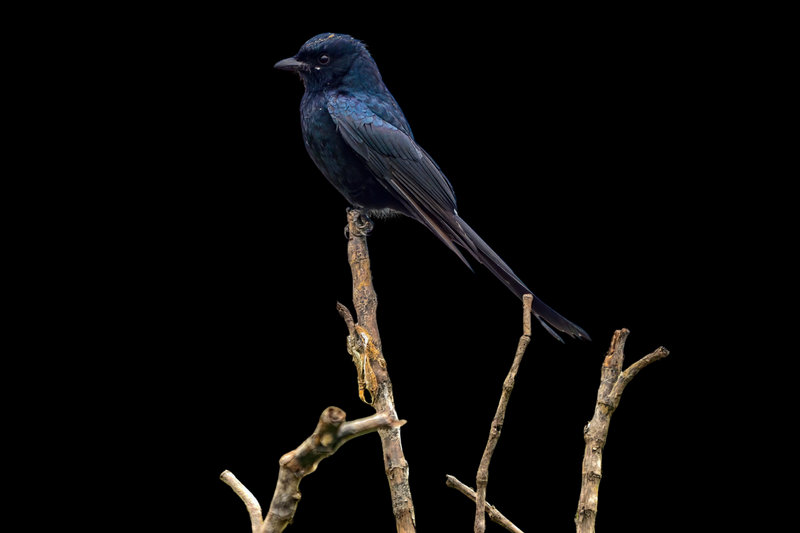
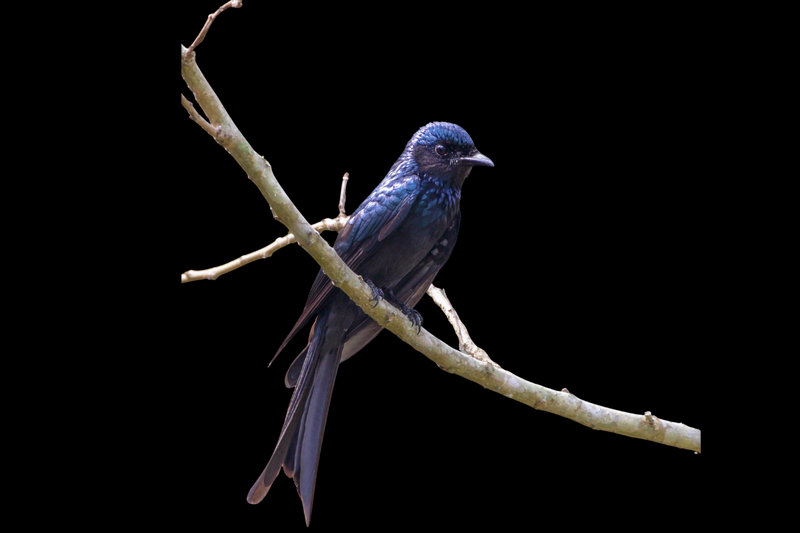
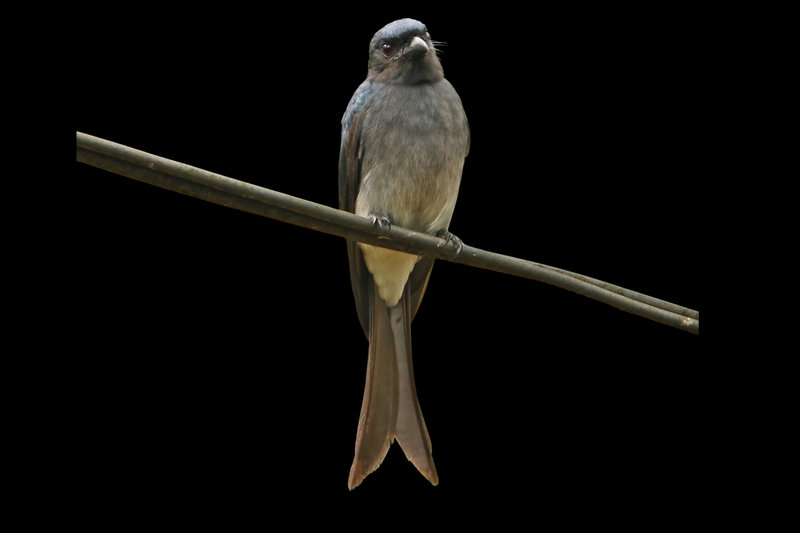
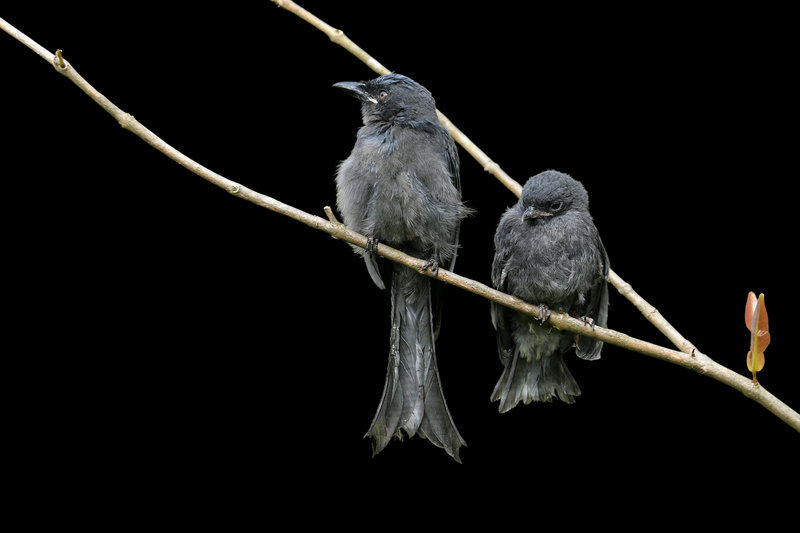
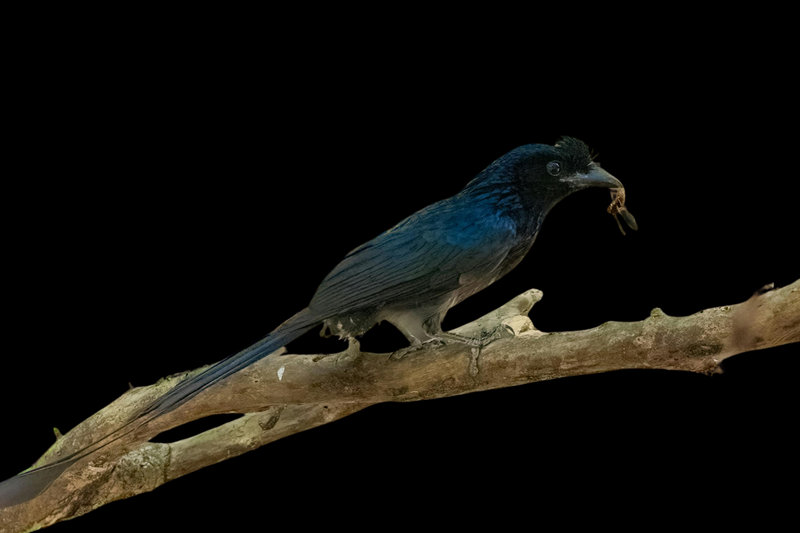
Glossy black with long racket-shaped tail extensions
ADAPTATIONS
Long tail for display mimics other birds
🌿 Ecology
HABITAT
Forests woodlands clearings
DIET
Insectivorous
GEOGRAPHIC RANGE
Indian subcontinent southeast Asia
REPRODUCTION
Lays 3-4 eggs in cup nests incubated 14-16 days
DIET DETAILS
Insects small vertebrates
⚠️ Threats & Conservation
PRIMARY THREATS
Deforestation habitat loss
💡 Interesting Facts
1
Mimic Masters: Greater Racket-tailed Drongos swoop with 120-gram bodies catching 30 grams of insects daily in Kerala's forests. Their racket tails are striking.
2
Forest Tricksters: These drongos cover 3000 sq km in Karnataka's woodlands mimicking bird calls. Habitat loss threatens their perches.
🔭 Sighting Guide
📍 BEST PLACES TO SIGHT
Thattekad Bird Sanctuary in Kerala
Dandeli Wildlife Sanctuary in Karnataka
Anamalai Tiger Reserve in Tamil Nadu
🗓️ BEST TIME TO SIGHT
October-March Dry season enhances visibility in forests for spotting drongos
🎯 SIGHTING TIPS
Listen for greater racket-tailed drongos' varied calls in trees