Home › Mammalia › Canidae › Mexican Gray Wolf (Canis lupus baileyi)
SPECIES PROFILE
Mexican Gray Wolf (Canis lupus baileyi)
Canis
IUCN STATUS
Critically Endangered


CONSERVATION STATUS
Critically Endangered
CLASS
Mammalia
GEOGRAPHICAL RANGE
Historically from central Mexico north to the US Southwest; now reintroduced in a small area of the Sierra Madre Occidental and the Arizona-New Mexico borderlands
DIET
Carnivore
HABITAT
Montane grassland, pine-oak forest, and desert scrub of the Sierra Madre Occidental; requires large unfragmented wilderness
🔬 Classification
PHYLUM
Chordata
CLASS
Mammalia
ORDER
Carnivora
FAMILY
Canidae
GENUS
Canis
📋 Description
SIZE
23–41 kg; body length 1.4–1.7 m; the smallest subspecies of gray wolf
COLORATION
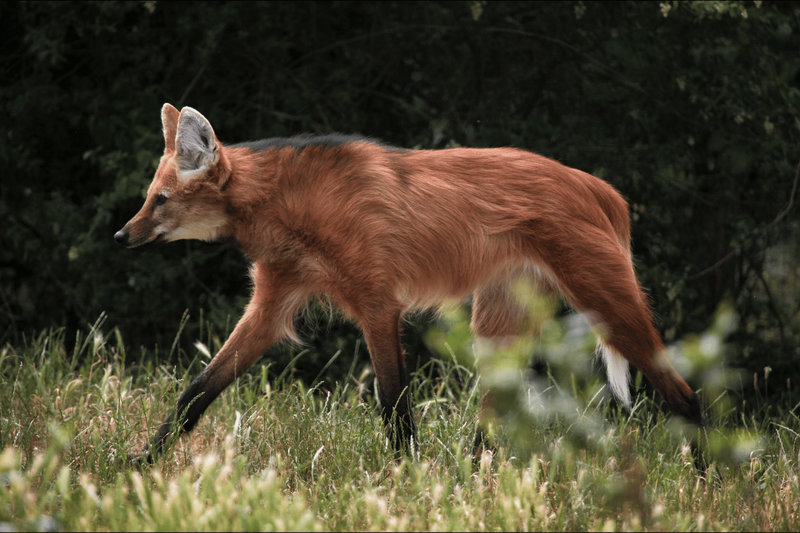
Reddish-brown to tawny coat with grey and black tones along the back; slender build; long legs
ADAPTATIONS
Smallest gray wolf subspecies; coursing predator of deer and peccary; pack hunting with coordinated strategy; highly territorial
🌿 Ecology
HABITAT
Montane grassland, pine-oak forest, and desert scrub of the Sierra Madre Occidental; requires large unfragmented wilderness
DIET
Carnivore
GEOGRAPHIC RANGE
Historically from central Mexico north to the US Southwest; now reintroduced in a small area of the Sierra Madre Occidental and the Arizona-New Mexico borderlands
REPRODUCTION
Pack of 2–10 with dominant breeding pair; 4–7 pups born in spring in a den; whole pack raises pups
DIET DETAILS
White-tailed deer and mule deer are primary prey; also peccary, rabbits, and small mammals
⚠️ Threats & Conservation
PRIMARY THREATS
Livestock depredation leading to illegal killing; habitat fragmentation; very small population size causing inbreeding; slow recovery rate
💡 Interesting Facts
1
The Mexican Gray Wolf is the most endangered wolf subspecies in the world; fewer than 50 wild individuals survive in Mexico, making every breeding pair critical to recovery.
2
Extirpated from the wild in Mexico by the 1980s, the Mexican Gray Wolf was saved from total extinction by a captive breeding programme involving just 7 founding individuals; all living wolves descend from these seven.
🔭 Sighting Guide
📍 BEST PLACES TO SIGHT
Janos Biosphere Reserve near Janos, Chihuahua, is the core recovery area for wild Mexican Gray Wolves in Mexico
Sierra Ajos-Bavispe Reserve near Cumpas, Sonora, has confirmed Mexican Gray Wolf presence
El Carmen-Dos Arroyos protected area near Múzquiz, Coahuila, is part of the wolf recovery landscape
🗓️ BEST TIME TO SIGHT
Very rare; best chance near Janos Biosphere Reserve in Chihuahua and the Sierra Ajos-Bavispe Reserve in Sonora; camera traps reveal presence.
🎯 SIGHTING TIPS
Year-round in Sierra Madre Occidental; reintroduced population in Sonora and Chihuahua; rare sightings near Janos and Bavispe areas.