Home › Mammalia › Phyllostomidae › Lesser Long-nosed Bat (Leptonycteris yerbabuenae)
SPECIES PROFILE
Lesser Long-nosed Bat (Leptonycteris yerbabuenae)
Leptonycteris
IUCN STATUS
Least Concern

CONSERVATION STATUS
Least Concern
CLASS
Mammalia
GEOGRAPHICAL RANGE
Migrates from central Mexico through the Sonoran Desert to southern Arizona and New Mexico; follows the blooming progression of agave and cactus
DIET
Nectarivore
HABITAT
Desert scrub and tropical dry forest with abundant agave and columnar cactus; roosts in large colonies in caves, mines, and buildings
🔬 Classification
PHYLUM
Chordata
CLASS
Mammalia
ORDER
Chiroptera
FAMILY
Phyllostomidae
GENUS
Leptonycteris
📋 Description
SIZE
7–9 cm body length; 18–30 g
COLORATION
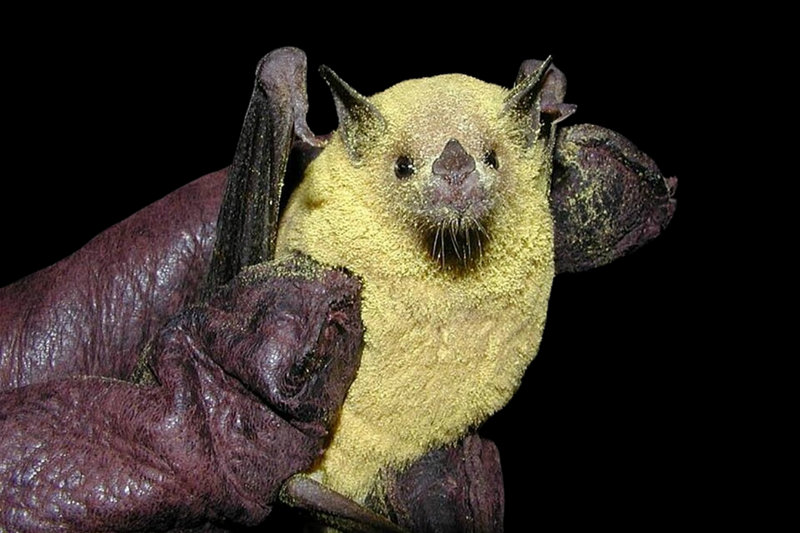
Brownish-grey fur; long tapered snout adapted for nectar feeding; long extensible tongue with bristles; no tail
ADAPTATIONS
Long tongue (as long as its body) with brush-like tip for extracting nectar; essential pollinator of agave and saguaro cactus; migrates with nectar sources
🌿 Ecology
HABITAT
Desert scrub and tropical dry forest with abundant agave and columnar cactus; roosts in large colonies in caves, mines, and buildings
DIET
Nectarivore
GEOGRAPHIC RANGE
Migrates from central Mexico through the Sonoran Desert to southern Arizona and New Mexico; follows the blooming progression of agave and cactus
REPRODUCTION
Single pup born June to July in a maternity cave colony; pup flies within a month; females return to the same maternity caves each year
DIET DETAILS
Nectar and pollen from agave, saguaro cactus, and organ pipe cactus; critical pollinator of blue agave used for tequila production
⚠️ Threats & Conservation
PRIMARY THREATS
White-nose syndrome (fungal disease); disturbance of roost caves; loss of agave plants from over-harvest for tequila production; pesticide use near foraging areas
💡 Interesting Facts
1
The Lesser Long-nosed Bat is the primary pollinator of blue agave — the plant used to make tequila; without this bat, the agave would struggle to reproduce sexually.
2
These bats fly hundreds of kilometres through Mexico following the sequential northward blooming of agave and cactus flowers — a nectar corridor that mirrors the monarch butterfly's milkweed corridor.
🔭 Sighting Guide
📍 BEST PLACES TO SIGHT
Sonoran Desert agave fields near Hermosillo, Sonora, are foraging areas for Lesser Long-nosed Bats during spring migration
Cueva de la Boca near Monterrey, Nuevo León, is a major bat roost cave with millions of bats including Lesser Long-nosed
Biosphere Reserve El Pinacate near Puerto Peñasco, Sonora, has Lesser Long-nosed Bats foraging on organ pipe cactus
🗓️ BEST TIME TO SIGHT
May to September in Sonoran Desert areas of northern Mexico; Cueva de la Boca near Monterrey and Sonoran agave fields at dusk are reliable.
🎯 SIGHTING TIPS
Summer. Migrates north through Mexico in spring following the flowering of agave and columnar cacti; roosts in caves in Sonora and Chihuahua.
🏨 Where to Stay
🐾 You Might Also Want to See...

Species
Range
Status
Species
Range
Status
Species
Range
Status
Species
Range
Status