Home › Amphibia › Ambystomatidae › Spotted Salamander (Ambystoma maculatum)
SPECIES PROFILE
Spotted Salamander (Ambystoma maculatum)
Ambystoma
IUCN STATUS
Least Concern

CONSERVATION STATUS
Least Concern
CLASS
Amphibia
GEOGRAPHICAL RANGE
Eastern North America from Nova Scotia to the Gulf states; widespread across Ontario and Quebec
DIET
Carnivore
HABITAT
Deciduous and mixed forest near seasonal wetlands; spends most of its life underground in root channels and small mammal burrows
🔬 Classification
PHYLUM
Chordata
CLASS
Amphibia
ORDER
Caudata
FAMILY
Ambystomatidae
GENUS
Ambystoma
📋 Description
SIZE
15–25 cm total length; 18–40 g
COLORATION
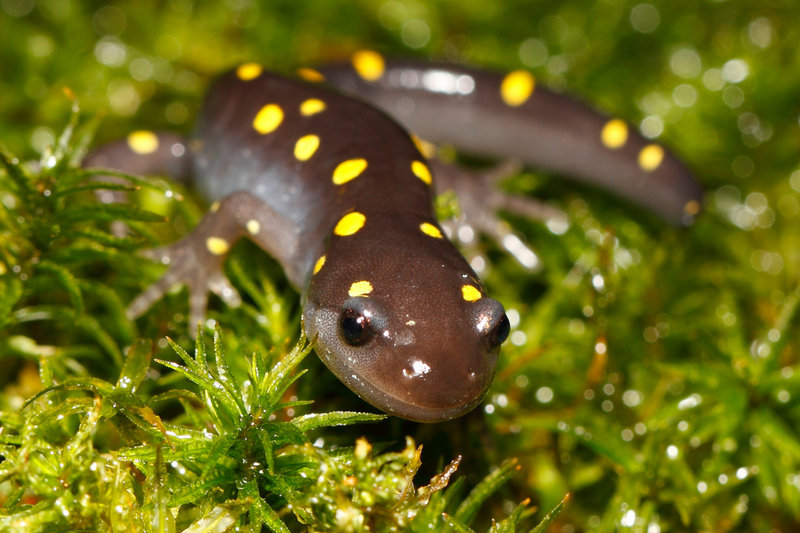
Shiny black or dark grey with two rows of yellow-orange spots from head to tail; orange spots on the head may fade to yellow with age
ADAPTATIONS
Returns to the same vernal pool each year to breed; larvae form a unique photosynthetic symbiosis with green algae inside their eggs
🌿 Ecology
HABITAT
Deciduous and mixed forest near seasonal wetlands; spends most of its life underground in root channels and small mammal burrows
DIET
Carnivore
GEOGRAPHIC RANGE
Eastern North America from Nova Scotia to the Gulf states; widespread across Ontario and Quebec
REPRODUCTION
Annual explosive breeding in vernal pools lasting 1–3 nights; egg masses of 50–250 eggs attached to submerged branches; no parental care after egg laying
DIET DETAILS
Worms, slugs, insects, and any invertebrate small enough to swallow
⚠️ Threats & Conservation
PRIMARY THREATS
Vernal pool loss from development; road mortality during migration; acid rain acidifying breeding pools
💡 Interesting Facts
1
Spotted Salamander eggs have a unique symbiotic relationship with green algae that lives inside the embryo cells — the only known vertebrate-algal photosymbiosis.
2
These salamanders spend over 95% of their lives underground, making mass breeding migrations the only reliable opportunity to observe them in the wild.
🔭 Sighting Guide
📍 BEST PLACES TO SIGHT
Gatineau Park near Ottawa, QC, has accessible vernal pools where Spotted Salamanders migrate on spring nights
Mer Bleue Conservation Area near Ottawa, ON, has forested wetland edges with Spotted Salamander breeding pools
Presqu'ile Provincial Park near Brighton, ON, has vernal pools with spring breeding Spotted Salamanders
🗓️ BEST TIME TO SIGHT
The first warm rainy night of spring triggers mass migration to breeding pools; Mer Bleue Bog and Gatineau Park near Ottawa are accessible sites.
🎯 SIGHTING TIPS
Spring. Watch for explosive breeding congregations in vernal pools during the first warm rainy nights above 5°C in April.