Home › Aves › Sulidae › Blue-footed Booby (Sula nebouxii)
SPECIES PROFILE
Blue-footed Booby (Sula nebouxii)
Sula
IUCN STATUS
Least Concern

CONSERVATION STATUS
Least Concern
CLASS
Aves
GEOGRAPHICAL RANGE
Pacific coast from California to Peru; major colonies on Gulf of California islands and the Galápagos
DIET
Carnivore
HABITAT
Open ocean and coastal areas; nests on flat or gently sloping ground on offshore islands; roosts on cliffs and rocky shores
🔬 Classification
PHYLUM
Chordata
CLASS
Aves
ORDER
Suliformes
FAMILY
Sulidae
GENUS
Sula
📋 Description
SIZE
81–91 cm; wingspan 150 cm; 1.5 kg
COLORATION
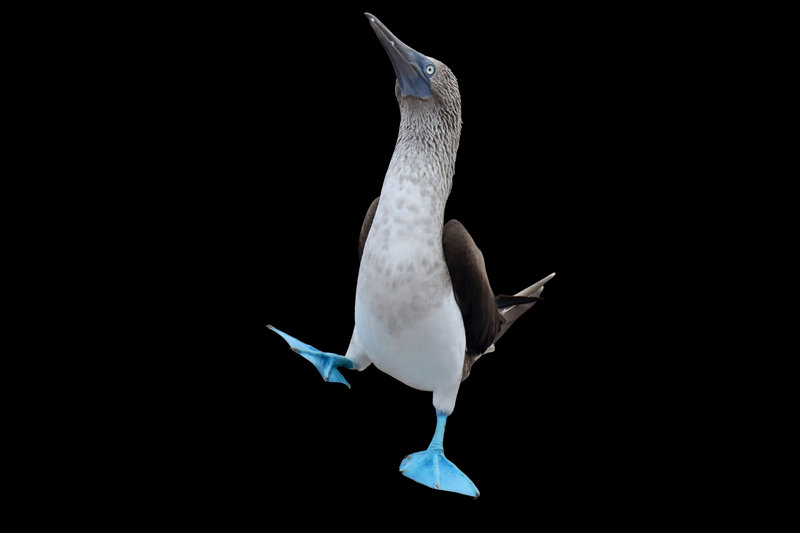
White body with brown wings and back; bright turquoise-blue feet distinctive; long pointed bill; blue-rimmed eyes
ADAPTATIONS
Vibrant blue feet signal health and fitness to mates — males perform exaggerated high-stepping dances to display them; plunge-dives from 24 m into the sea at 100 km/h
🌿 Ecology
HABITAT
Open ocean and coastal areas; nests on flat or gently sloping ground on offshore islands; roosts on cliffs and rocky shores
DIET
Carnivore
GEOGRAPHIC RANGE
Pacific coast from California to Peru; major colonies on Gulf of California islands and the Galápagos
REPRODUCTION
Lays 1–3 eggs directly on bare ground; incubates by covering eggs with its large warm feet; chicks hatch altricial; siblicide common in three-egg clutches
DIET DETAILS
Small schooling fish caught by spectacular plunge-diving from height; often hunts cooperatively in flocks over fish schools driven to the surface by tuna and dolphins
⚠️ Threats & Conservation
PRIMARY THREATS
Habitat disturbance at nesting colonies; human collection of eggs and adults; decline of prey fish from overfishing; introduced predators on nesting islands
💡 Interesting Facts
1
The Blue-footed Booby's vivid turquoise feet are a reliable indicator of health — females consistently choose males with the brightest feet, and artificially painted dull feet reduce mating success.
2
The word "booby" comes from the Spanish "bobo" meaning stupid or clown — a reference to the birds' apparent tameness around humans and their comical courtship dances.
🔭 Sighting Guide
📍 BEST PLACES TO SIGHT
Isla San Pedro Mártir in the Gulf of California, Sonora, has one of Mexico's largest Blue-footed Booby colonies
Isla Raza near Bahía de los Ángeles, BCN, has large seabird colonies including Blue-footed Boobies
Bahía de los Ángeles, BCN, provides boat access to offshore islands with nesting Blue-footed Boobies
🗓️ BEST TIME TO SIGHT
Year-round on Gulf of California islands; breeding displays with high-stepping foot shows visible May to July at Isla de la Plata and Pacific coastal islands.
🎯 SIGHTING TIPS
Year-round on islands in the Gulf of California; Isla San Pedro Mártir and Isla Raza have colonies; May to July for courtship foot-display dances.
🏨 Where to Stay
🐾 You Might Also Want to See...

Species
Range
Status
Species
Range
Status
Species
Range
Status
Species
Range
Status