Home › Amphibia › Plethodontidae › Bolitoglossa salamander (Bolitoglossa mexicana)
SPECIES PROFILE
Bolitoglossa salamander (Bolitoglossa mexicana)
Bolitoglossa
IUCN STATUS
Least Concern

CONSERVATION STATUS
Least Concern
CLASS
Amphibia
GEOGRAPHICAL RANGE
Southern Mexico from Oaxaca and Chiapas south through Central America; one of over 100 species in this genus
DIET
Carnivore
HABITAT
Humid cloud forest and montane rainforest; hides under logs, rocks, and in bromeliads; entirely terrestrial as adults; requires old-growth forest with abundant microhabitat
🔬 Classification
PHYLUM
Chordata
CLASS
Amphibia
ORDER
Caudata
FAMILY
Plethodontidae
GENUS
Bolitoglossa
📋 Description
SIZE
8–12 cm total length; 3–8 g
COLORATION
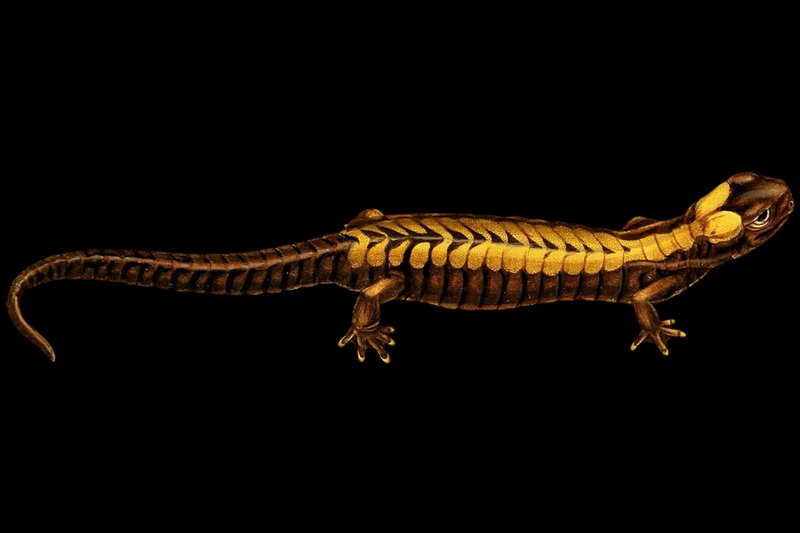
Brown to reddish-brown above with irregular darker blotches; pale below; large eyes; fully webbed feet; no external gills as adults
ADAPTATIONS
Fully webbed feet allow climbing on smooth wet leaves and bark; highly elongated tongue fires out instantaneously to catch insects; can autotomize (drop) the tail as a defence
🌿 Ecology
HABITAT
Humid cloud forest and montane rainforest; hides under logs, rocks, and in bromeliads; entirely terrestrial as adults; requires old-growth forest with abundant microhabitat
DIET
Carnivore
GEOGRAPHIC RANGE
Southern Mexico from Oaxaca and Chiapas south through Central America; one of over 100 species in this genus
REPRODUCTION
Lays small clutches of 5–20 eggs in moist terrestrial locations; development is direct (no aquatic larval stage); female guards eggs
DIET DETAILS
Tiny arthropods, mites, springtails, and small invertebrates caught with the explosive tongue strike
⚠️ Threats & Conservation
PRIMARY THREATS
Cloud forest loss from agricultural encroachment and logging; climate change drying cloud forest; chytrid fungus disease affecting amphibians throughout Mexico
💡 Interesting Facts
1
Mexico is a global hotspot for Bolitoglossa salamanders with dozens of endemic species found nowhere else on Earth; the Sierra Madre del Sur and Chiapas highlands have some of the highest salamander diversity on the planet.
2
Bolitoglossa salamanders breathe entirely through their skin and mouth lining — they have no lungs — making them extremely sensitive to air pollution, skin-contact pesticides, and desiccation.
🔭 Sighting Guide
📍 BEST PLACES TO SIGHT
Sierra de Juárez cloud forest near Ixtlán de Juárez, Oaxaca, has Bolitoglossa salamanders on rainy nights in old-growth forest
El Triunfo Biosphere Reserve cloud forest near Arriaga, Chiapas, has Bolitoglossa salamanders under logs on the forest floor
Sierra de Manantlán Biosphere Reserve near Autlán, Jalisco, has Bolitoglossa salamanders in cloud forest at the northern range limit
🗓️ BEST TIME TO SIGHT
Year-round in cloud forest; rainy season nights (June to October) are most productive; forest floor near bromeliads in Sierra de Juárez, Oaxaca, and Chiapas highlands.
🎯 SIGHTING TIPS
Year-round in cloud forest; most active on rainy nights; Sierra de Juárez and Sierra de Chiapas highlands are the best locations.
🏨 Where to Stay
🐾 You Might Also Want to See...

Species
Range
Status
Species
Range
Status
Species
Range
Status
Species
Range
Status