Home › Aves › Accipitridae › Shikra (Accipiter badius)
SPECIES PROFILE
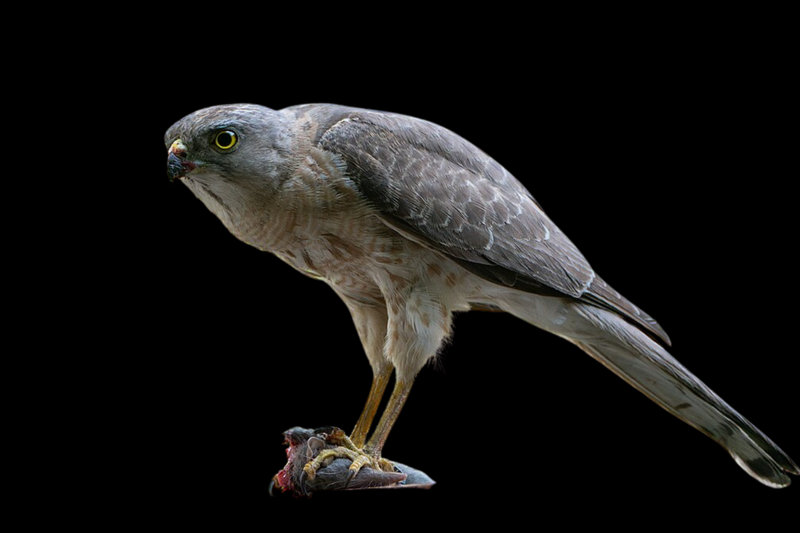
Shikra (Accipiter badius)
Accipiter
IUCN STATUS
Least Concern

CONSERVATION STATUS
Least Concern
CLASS
Aves
GEOGRAPHICAL RANGE
Indian subcontinent southeast Asia
DIET
Insectivorous
HABITAT
Open woodlands urban areas scrub
🔬 Classification
PHYLUM
Chordata
CLASS
Aves
ORDER
Accipitriformes
FAMILY
Accipitridae
GENUS
Accipiter
📋 Description
SIZE
30-36 cm long 80-150 g
COLORATION
Grey upperparts white underparts barred chest red eyes
ADAPTATIONS
Short rounded wings for agile forest hunting
🌿 Ecology
HABITAT
Open woodlands urban areas scrub
DIET
Insectivorous
GEOGRAPHIC RANGE
Indian subcontinent southeast Asia
REPRODUCTION
Lays 3-5 eggs in tree nests incubated 18-21 days
DIET DETAILS
Small birds lizards insects
⚠️ Threats & Conservation
PRIMARY THREATS
Habitat loss human conflict
💡 Interesting Facts
1
Forest Hawks: Shikras swoop with 120-gram bodies catching 30 grams of prey daily in Rajasthan's woodlands. Their red eyes are piercing.
2
Urban Predators: These hawks cover 3000 sq km in Delhi's parks nesting in tall trees. Urban sprawl affects their hunting grounds.
🔭 Sighting Guide
📍 BEST PLACES TO SIGHT
Ranthambore National Park in Rajasthan
Okhla Bird Sanctuary in Delhi
Sultanpur National Park in Haryana
🗓️ BEST TIME TO SIGHT
Year-round Open woodlands ensure visibility for spotting shikras
🎯 SIGHTING TIPS
Spot shikras perched high scanning for prey