Home › Mammalia › Felidae › Cheetah (Acinonyx jubatus)
SPECIES PROFILE
Cheetah (Acinonyx jubatus)
Acinonyx
IUCN STATUS
Vulnerable

CONSERVATION STATUS
Vulnerable
CLASS
Mammalia
GEOGRAPHICAL RANGE
Sub-Saharan Africa, relic population in Iran
DIET
Carnivorous
HABITAT
Savannas, grasslands, deserts
🔬 Classification
PHYLUM
Chordata
CLASS
Mammalia
ORDER
Carnivora
FAMILY
Felidae
GENUS
Acinonyx
📋 Description
SIZE
1.1-1.5 m (body), 30-72 kg
COLORATION
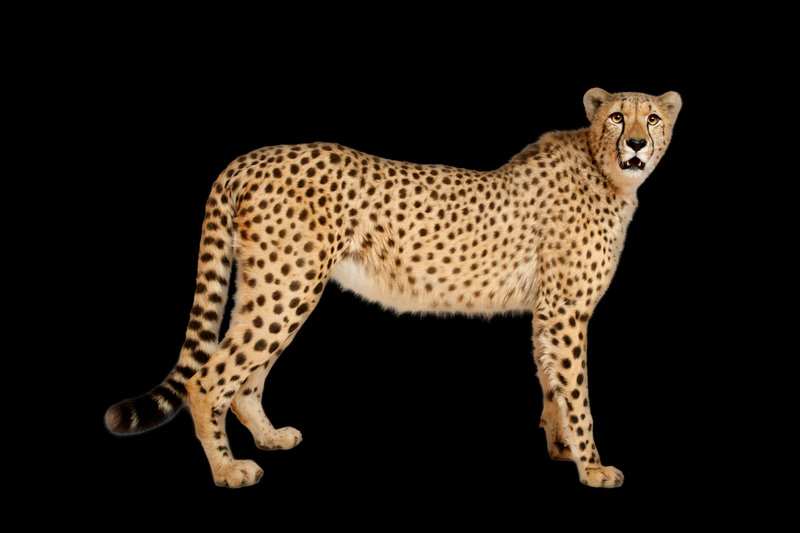
Tawny with black spots; tear marks on face
ADAPTATIONS
Slender build, large nasal passages for sprinting
🌿 Ecology
HABITAT
Savannas, grasslands, deserts
DIET
Carnivorous
GEOGRAPHIC RANGE
Sub-Saharan Africa, relic population in Iran
REPRODUCTION
Gestation 90-95 days, 3-5 cubs; high cub mortality
DIET DETAILS
Antelope, gazelles, hares
⚠️ Threats & Conservation
PRIMARY THREATS
Habitat loss, human conflict, low genetic diversity
💡 Interesting Facts
1
Speed Machine: Cheetahs are the fastest land animals, reaching speeds of 97-113 km/h in short bursts covering up to 500 meters, thanks to their lightweight frame and specialized muscles. Their acceleration rivals that of a sports car, making them unparalleled hunters of the plains.
2
Fragile Survivors: Despite their prowess, cheetahs have low genetic diversity from a population bottleneck 10,000 years ago, leaving them vulnerable to disease and competition from larger predators. This ancient event still shapes their survival challenges today.
🔭 Sighting Guide
📍 BEST PLACES TO SIGHT
Kgalagadi Transfrontier Park, South Africa/Botswana
Masai Mara National Reserve, Kenya
Serengeti National Park, Tanzania
🗓️ BEST TIME TO SIGHT
June-October: Dry season offers open plains for spotting cheetahs hunting.
🎯 SIGHTING TIPS
Join early morning game drives to see cheetahs hunting in open savannas.